The PA 200 – Tornado is a twin-engine, two-seat, variable-sweep wing, all-weather combat aircraft, of entirely European design and construction, which entered service with the Italian Air Force in 1982. Initially acquired in the Interdiction Strike (IDS) version (Aeronautical nomenclature A-200A and TA-200A for dual-control training variants), the Tornado later saw some aircraft upgraded to the IT-ECR (Electronic Combat Reconnaissance) standard (aeronautical nomenclature EA-200B), specialising in the suppression of enemy air defences through the use of AGM-88 HARM air-to-surface missiles.
Built by the trinational Panavia consortium, comprising Italy, the United Kingdom, and Germany, it has been continuously updated to maintain its operational relevance in contemporary scenarios. It remains in service with only the 6th Wing, which employs aircraft brought up to the Mid Life Upgrade standard (aerospace nomenclature A-200C/TA-200B).

Technical specifications:
Wingspan min./max: 8.60/13.91 m – length: 16.70 m – height: 5.95 m – maximum take-off weight: 28,000 kg – propulsion system: two Turbo Union RB.199 Mk.103 turbofans with 71.2 kN with afterburner – maximum speed: 1,480 km/h – range: 3,800 km – crew: 1 pilot, 1 navigator – armament: 2 x 27 mm cannons (1 on IT-ECR), up to 9,000 kg of external loads airborne (AIM-9L Sidewinder air-to-air missiles, AGM-88 HARM, Storm Shadow cruise missiles, GBU series guided bombs, reconnaissance and target designation pods, auxiliary fuel tanks).
The HH-101A, the military version of the civilian AW.101, is the Italian Air Force's most modern and high-performing helicopter. Capable of operating day and night in any weather conditions, it performs multiple roles, including air support for special operations and Personnel Recovery (rescuing personnel from crisis areas). These capabilities allow it to meet the high standards required by the international organisations of which Italy is a member.
The Caesar configuration, as defined by the Air Force, possesses a high survivability rate in hostile territory thanks to an advanced integrated self-protection system. It is equipped with emergency flotation devices that increase the crew's chances of survival in the event of a forced landing or immediate ditching. It has a particularly extensive range, thanks to its in-flight refuelling capability. It is characterised by a high degree of manoeuvrability, allowing it to sustain tactical flight at very low altitudes, and by its highly technological equipment, particularly for human-machine interaction and communications (thanks to tactical data links).
The aircraft was developed by AgustaWestland, now Leonardo Helicopters.

Technical specifications:
Length: 22.81 m – Height: 6.65 m – Main rotor diameter: 18.60 m – Propulsion system: 3 x General Electric CT7-8E (3 x 2,500 CVA) – maximum take-off weight: 15,600 kg – maximum speed: approximately 280 km/h – aAutonomy: 5 hours – aArmament: 3 x 7.62 mm M134D machine guns.
It T-345A It is a military training aircraft designed to meet the operational requirements of modern air forces, combining high performance, economic sustainability, and advanced technological capabilities. Currently employed in the Phase II the training path of military pilots, it is also destined to progressively replace the T-339C in the Stage III, contributing to a continuous and efficient training path.
Integrated into a wider training system which includes the T-346A for the Stage IV (Lead In to Fighter Training – LIFT), the T-345A allows a smooth transition to next-generation combat systems, reducing overall training times and costs.
The aircraft features advanced digital avionics, with three multifunction displays (MFDs), a Head-Up Display (HUD), and HOTAS controls, offering an operating environment consistent with that of front-line aircraft. The integration of Ground Based Training System (GBTS) allows deployment in simulated scenarios, both in flight and on the ground, enhancing training effectiveness.
Propelled by a turbofan engine Williams FJ44-4M-34, the T-345A It represents a training platform that is advanced, reliable, and flexible, in line with the operational needs of the armed forces of the present and the future.

Technical specifications:
Length: 9.85 m – height: 3.74 m – wingspan: 8.47 m – takeoff weight: 3,600 kg (4,100 kg with 2 tanks) – maximum speed: 787 km/h – propulsion system: one Williams FJ44-4M-34 turbofan engine – range: 1,850 km (with two tanks) – crew: 1-2 pilots.
The T-346A twin-engine jet (military designation of the Aermacchi M-346) is the most advanced pre-operational trainer currently in service worldwide. With fully digital flight controls and avionics, and carefree handling at high angles of attack, the T-346A is designed for training pilots destined for Fourth and Fifth Generation aircraft. It also offers significant savings because a large part of the training programme previously carried out on more demanding aircraft can be completed on it.
The T-346A is an integrated training system comprising, in addition to the aircraft itself, a ground segment made up of various simulation systems. The system's flagship LVC (Live, Virtual and Constructive) philosophy enables pilots to operate simultaneously and in a combined manner in real flight (Live) and on various types of simulators (Virtual), interfacing with all types of computer-generated threat forces (Constructive).
It is used for Phase IV of training (Lead In to Fighter Training - LIFT), preparatory to subsequent deployment on Fighter aircraft.
It was designed and built entirely in Italy by Alenia Aermacchi, now Leonardo Aircraft.

Technical specifications:
Length: 11.49 m – height: 4.76 m – wingspan: 9.72 m – take-off weight: 9,500 kg – speedMaximum speed: 1,300 km/h – Propulsion system: 2 Honeywell F124-GA-200 turbofans of 27.9 kN – Range: 2,500 km (with two tanks) – Crew: 1-2 pilots – Armament: BRD-4-250, AIM-9L Captive missile, IRIS-T Captive missile.
The TH-500B, military designation of the Nardi-Hughes NH-500E, is a light, five-bladed, single-engine helicopter used for training and liaison. It is characterised by its high operational flexibility and versatility, and is employed by the Italian Air Force in a configuration that allows for comprehensive training capabilities. In addition to training duties, it can undertake missions in support of SAR (Search And Rescue) operations, personnel, cargo or casualty transport, rescue operations, defence of military bases and installations, live firing training, reconnaissance, observation, and liaison. It has the ability to operate over bodies of water with the use of fixed floats and on snowy surfaces with special ski landing gear.
It is employed by the 72nd Wing of Frosinone, the only rotary-wing school in Italy for the training of helicopter pilots for the Air Force, other Armed Forces, and State Armed Corps, as well as for foreign attendees.
Designed by Hughes, later absorbed by Boeing, the TH-500B was built in Italy by BredaNardi, which later merged into AgustaWestland, now Leonardo Helicopters.

Technical specifications:
Rotor diameter: 8.04 m – length: 9.39 m – height: 2.83 m – maximum take-off weight: 1,361 kg – propulsion systeman Allison 250C-20B 420 shp turbine limited to 375 shp – Maximum speed: 278 km/h – range: 442 km – crew: 1-2 pilots.
The KC-767A is the aerial refuelling and transport variant of the 767-200 Extended Range commercial aircraft. The aircraft can be configured in three different layouts, with a payload of up to 25,000 kg: the CARGO configuration can carry 19 standard NATO military pallets; the FULL PAX configuration accommodates up to 192 passengers with their luggage, and the COMBI configuration carries up to 100 passengers and 10 standard NATO military pallets.
In all its configurations, the KC-767A ensures a high flight range and payload capacity, also thanks to its aerial refuelling capability to extend its operational radius. As a tanker, it is fitted with systems compatible with Italian and allied aircraft. Its capabilities include: a boom system with a rigid boom and a refuelling rate of up to 4,091 litres per minute; a centreline hose-and-drogue system with a rate of up to 2,727 litres per minute; wingtip hose-and-drogue systems with a rate of up to 1,818 litres per minute; and a universal receptacle with a refuelling rate of up to 4,091 litres per minute.
The aircraft is designed and built by Boeing in the United States, with an industrial share of 15% from Aeritalia, now Leonardo Aircraft.

Technical specifications:
Length: 48.51 m – wingspan: 47.57 m – height: 15.85 m – propulsion2 x General Electric GF6-80C2 turbofan engines of 237.37 kN each.Take-off weight: 180,000 kg – Maximum fuel load: 70 tonnes – Range: 12,195 km – Operational range: 11,500 km – Maximum speed: 900 km/h – Crew: 2 pilots, 2 specialists – Passengers: up to 192.
 Technical specifications:
Rotor diameter: 13.8 m – length: 16.66 m – maximum width (horizontal platform): 4.22 m – height: 4.98 m – maximum take-off weight: 6,400 kg (7,000 kg version B) – propulsion system: two Pratt & Whitney PT6C-67C 1,679 shp turboshafts – maximum speed: 310 km/h.
Technical specifications:
Rotor diameter: 13.8 m – length: 16.66 m – maximum width (horizontal platform): 4.22 m – height: 4.98 m – maximum take-off weight: 6,400 kg (7,000 kg version B) – propulsion system: two Pratt & Whitney PT6C-67C 1,679 shp turboshafts – maximum speed: 310 km/h.
The VC-50 A (military designation of the Falcon 50) is an intercontinental range trijet used for VIP and air ambulance transport.
Derived from the previous Falcon 20, the Falcon 50 retains almost entirely its structural characteristics with the integration of a third engine installed in the tail. The aircraft can quickly switch from VIP configuration, with nine passengers, to medical transport configuration, with two stretchers and five passengers. In this role it transports the sick, traumatised patients, or patients requiring organ transplants.
The Falcon is designed and built entirely in France by Dassault Aviation.

Technical specifications:
Wingspan: 18.86 m – length: 18.52 m – height: 6.97 m – maximum take-off weight: 17,600 kg – propulsion system: three AlliedSignal TFE731-3 turbofan engines of 16.46 kN – Maximum speed: 940 km/h – Range: 5,500 km – Crew: 2 pilots, 1 specialist, 1 flight attendant – Capacity: 9 passengers.
The Predator B is a Remotely Piloted Aircraft (RPA) for reconnaissance, surveillance, and target acquisition missions. The weapon system comprises three main elements. The aircraft, equipped with a high-performance turboprop engine; the Ground Control Station (GCS), a ground control station that can control the aircraft during operations even hundreds of kilometres away via a satellite link; the Exploitation Data Station (EDS), where images received from the aircraft are analysed in real-time and transmitted to operational users via a telecommunications node.
The Predator B offers high performance in both ISTAR (Intelligence, Surveillance, Target Acquisition and Reconnaissance) missions and, in maritime and land environments, in patrol, search, and rescue operations. The electro-optical, infrared, and radar sensors located under the fuselage provide unique observation and detection capabilities, able to operate even at night. The control station is a veritable ground-based cockpit, connected via antennas and receivers capable of communicating with the aircraft even via satellite.
It is designed and built entirely in the USA.

Technical specifications:
Wingspan: 20.1 m – length: 11 m – height: 3.8 m – maximum speed: 360 km/h – maximum take-off weight: 4,760 kg – propulsion systemHoneywell TPE331-10GD 900 CVA turboprop – range: over 30 h – payload: 1,700 kg.
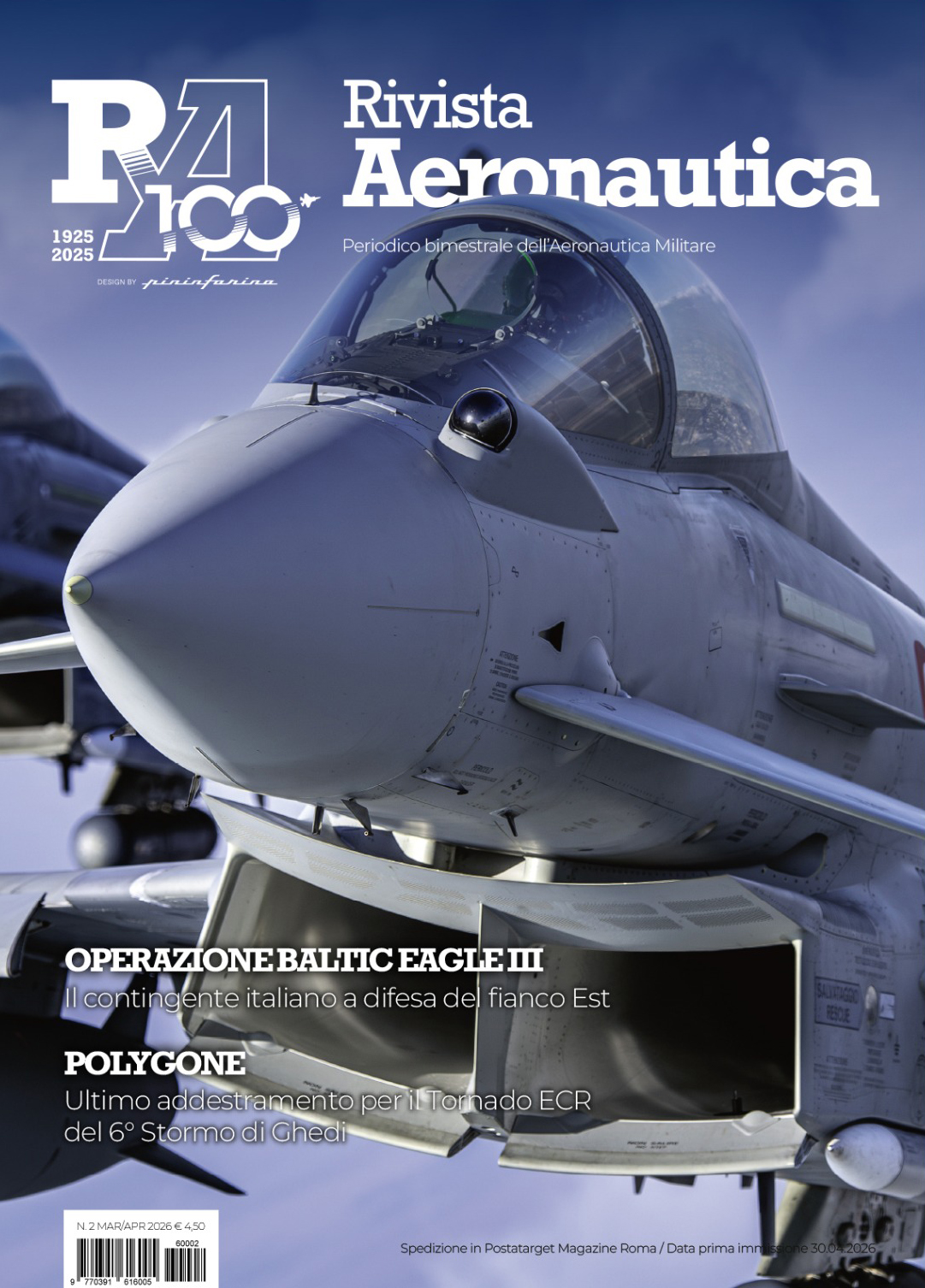
The F-2000 A fighter (military designation EF-2000 Typhoon) is the most advanced combat aircraft developed on the European continent, capable of offering wide-ranging operational capabilities and unparalleled effectiveness in Air Defence. The aircraft is on national alert status, guaranteed by the Air Force units for 24-hour Air Defence, 365 days a year. In just a few minutes, it ensures fighters can take off to intercept and identify any suspicious aerial trace detected by radar. The F-2000A, which has recently also acquired air-to-ground capabilities, is the result of industrial collaboration between Italy, Germany, the United Kingdom and Spain.

Technical specifications:
Wingspan: 14.74 m – length: 15.96 m – height: 5.28 m – maximum take-off weight: 23,500 kg – propulsion system: 2 Eurojet EJ200 turbofans with 60kN dry thrust and 90kN with afterburner – maximum speed: 2,495 km/h – maximum range: 2,900 km – crew: 1/2 pilots – armament: 1 x 27 mm Mauser cannon, up to 6,500 kg of external stores (AIM-9L Sidewinder, AIM-120 AMRAAM, Iris-T, Meteor missiles, GBU series guided bombs, auxiliary fuel tanks and laser targeting pods).
The P-72A, the military designation of the ATR-72MP, is a maritime patrol aircraft capable of operating over the sea at low and medium altitudes, near the coast, at various latitudes and climates, regardless of light and weather conditions. The aircraft can search and acquire information for the discovery, location, recognition, classification, tracking and identification of surface contacts. It is based on the ATR-72 regional twin-turboprop airframe, on which the ATOS mission system is installed that integrates on-board sensors, managed by four multifunctional consoles, through an electronically scanning radar and an electro-optical turret. It also has capabilities for real-time identification and analysis on board the aircraft of electromagnetic emissions in the area of operations, and the ability to transmit information through a self-protection system with the possibility of deployment in hostile territory.
Joint crews are made up of pilot officers and petty officer aircrew members who belong to the Air Force and the Navy.
The MP version was developed by Alenia Aeronautica, now Leonardo Aircraft, and installed on the airframe of the ATR-72, designed and built by the ATR consortium, equally controlled by Leonardo and Airbus.

Technical specifications:
Wingspan: 27.05 m – length: 27.16 m – height: 7.65 m – maximum take-off weight: 23,000 kg – maximum speed: 480 km/h – propulsion system: two Pratt & Whitney Canada PW127M 2,500 shp turboprops – range: 3,240 km – crew: 2 pilots, 5 operators.
The F-35 is a fifth-generation weapon system with a range of operational capabilities that allow it to simultaneously and autonomously perform all missions in air tactician doctrine. The state-of-the-art technology applied to its onboard sensors and the aircraft's low observability (reduced capability of being detected by radar) increase its operational effectiveness, ensuring not only higher levels of survivability in hostile territories but also a high awareness and understanding of the tactical scenario.
The aircraft's high capabilities for discovery, identification and engagement precision give it outstanding potential. This, combined with innovative communication and real-time sharing of essential information (Net-Centric capabilities), provides the pilot with unrivalled theatre of operations management. The Italian Air Force possesses both the F-35A, conventionally taking off and landing (CTOL) versions, and the F-35B, short take-off and vertical landing (STOVL) versions, for use on austere runways as well as amphibious assault ships, helicopter carriers and aircraft carriers (LHA/LHD/CV). Italy is a Level II industrial partner and has the only final assembly and check-out (FACO) line in Europe, located at Cameri.

F-35A (*F-35B) – Wingspan: 10.6 m – Length: 15.4 m/15.6 m* – Height: 4.6 m – Maximum speed: 1,970 km/h – Maximum take-off weight: 8,000 kg/6,000 kg* – Propulsion system: 1 Pratt & Whitney F135 turbofan engine with 191kN (with afterburner) or 187kN (with afterburner)* – Crew: 1 pilot – Armament: 25 mm GAU-22A cannon (external*), AMRAAM and Meteor missiles, GBU-39 (A and B), GBU-31 (A), GBU-32 (B) laser and GPS guided bombs.


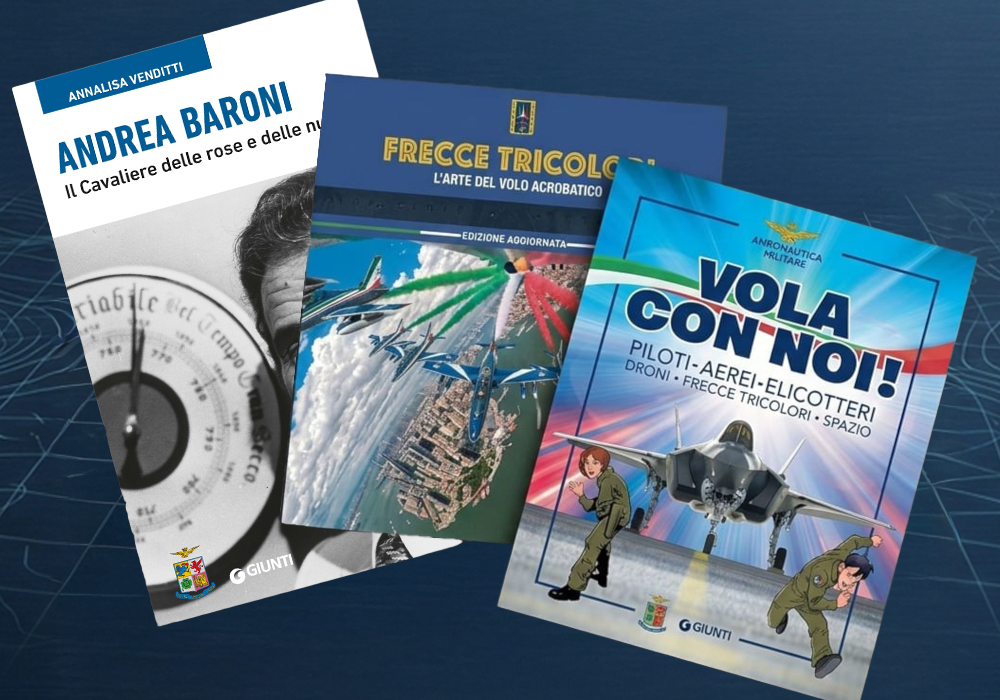
Online sale
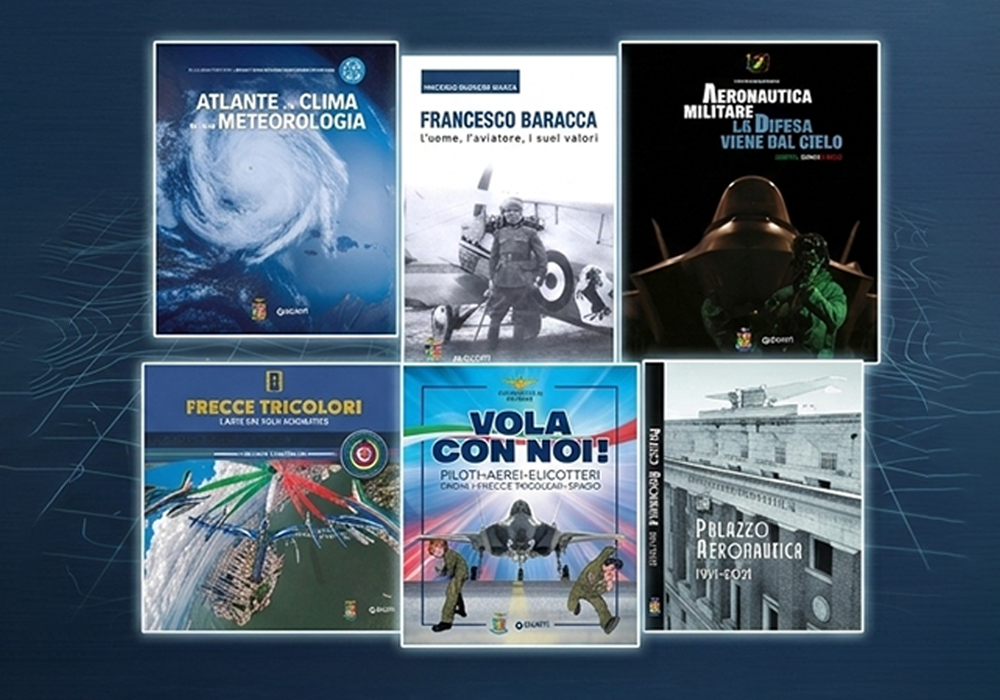
Visit the new section dedicated to the Air Force's publishing products.

Discover the Armed Forces events

Every day, from north to south, thousands of children face bigger challenges...


Semplifica la comunicazione tra Difesa e Portatori di Interesse

Online sale
Discover the Armed Forces events
Every day, from north to south, thousands of children face bigger challenges...