

Agusta Bell AB.204B

Single-engine, two-bladed rotor, transport and rescue helicopter. Designed as a helicopter for the evacuation of injured people, the Bell Model 204 had a large cargo compartment accessible via large sliding doors on both sides of the fuselage, a Lycoming T53 turbojet that provided performance at altitude and speed, and a semi-articulated two-bladed rotor with a distinctive noise. […]
Avia FL.3

Avia FL.3 Tourist and training aircraft, single-seater, single-engine, two-seater, mixed-structure. In 1938 the Ministry of Aeronautics held a competition for a school and small tourism aircraft intended for the RUNA (Royal National Aeronautic Union). The first military order for 50 machines came in March 1939. In the summer of 1940 it was planned to […]
Bell P-39

Bell P-39 Ground attack aircraft, a low-wing monoplane with a cantilevered tailplane, single-engine, monoplane with an all-metal structure. The P-39, born from a project by Bell Aircraft Corporation, literally took its name from its main armament: the 37 mm American Armament Corporation automatic cannon, the installation of which necessitated the adoption of a tricycle chassis […]
Breda Ba.33 and Ba.39

Low-wing single-seater for tourism, sport and two-seater connection, single-engine. The Breda Ba.33 was a low-wing monoplane with a two-seater fuselage. The first prototypes placed first and second in the 2nd Italian Air Race, an achievement that prompted the Aeronautical Authority to commission six aircraft with a Colombo S.63 engine of 130 hp to participate in the […]
Breda A.4
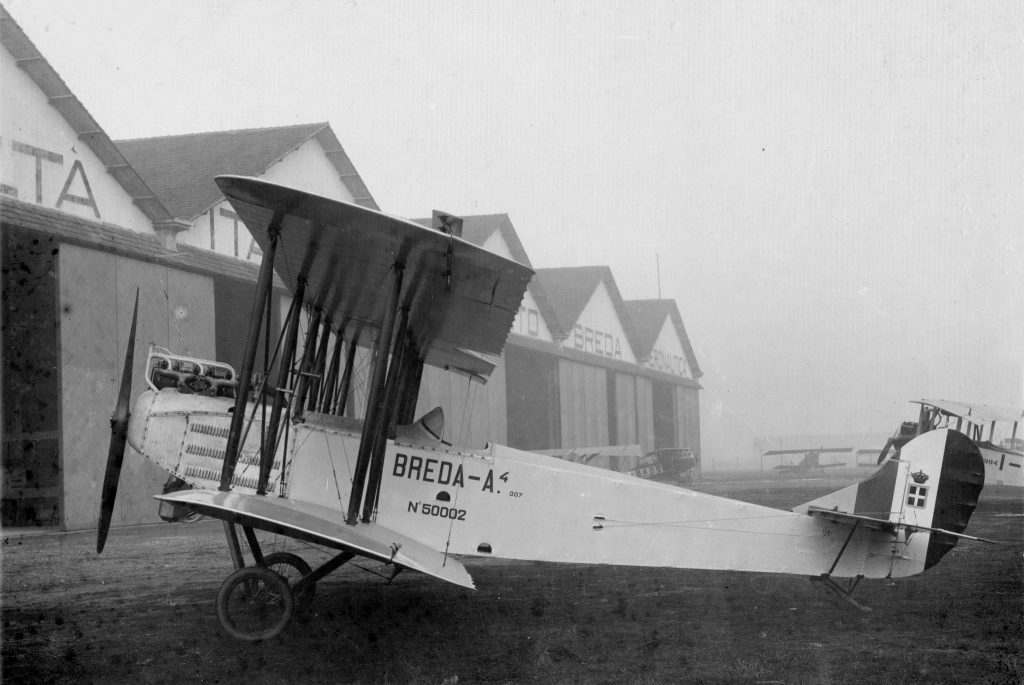
Single-engine biplane trainer, side-by-side seating, single-engine. In 1924, Breda began the replacement of aircraft used in its flight school. The first step in this upgrade process was the A.4, a basic training single-engine biplane. Conventionally designed, the A.4 featured a two-bay biplane airframe and a 130 hp Colombo D110 engine, with […]
Breda A.7

A two-seater parasol monoplane for reconnaissance or combat, with a steel structure, single-engine. The Breda A.7 was designed and built in 1924. It was a high-wing monoplane with a fully metallic fuselage which was fitted with a 400 hp “Lorraine-Dietrich” engine. In 1927 the Air Force adopted a modified version of the prototype, where an “Isotta [...] engine was also installed."
Breda A.9

Biplane, single-engine, two-seater or single-seater (A.9Bis), for training and aerobatics, with an entirely wooden structure with fabric covering except for the sheet metal covering of the cockpits. It was fitted with a 260 hp Isotta-Fraschini “Asso 200” engine. A total of 60 aircraft were produced, 43 of which were military and intended to replace the SVAs of the Flying School […]
Breda Ba.15

A two-seater, tandem, cabin monoplane, the Breda 15 had a wooden truss fuselage made in two detachable sections, twin flight-disengageable controls, and a variable incidence stabiliser. The Ba.15 was an aircraft that could easily be converted into a seaplane. The Regia Aeronautica used a total of 255 of them, including prototypes, standard models, and seaplanes. Starting in 1930, it distributed [...]
Breda Ba.19
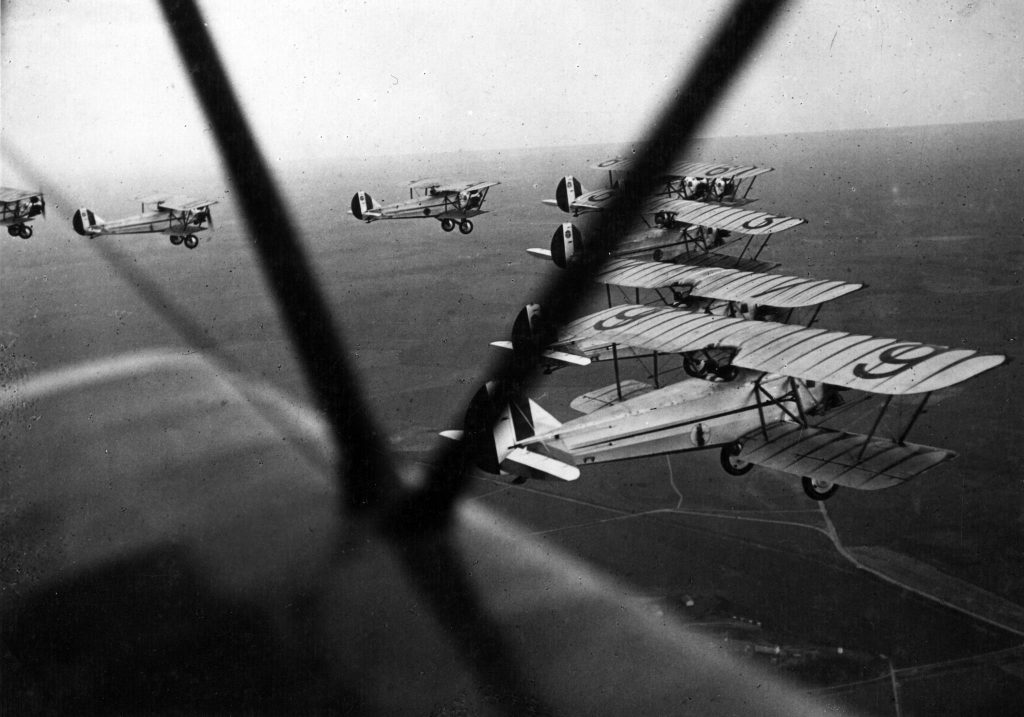
Biplane for high-level aerobatics, single-seater or two-seater, single-engine. The Breda Ba.19 was one of the most celebrated aerobatic aircraft of the 1930s and equipped the first Italian aerobatic teams. Of mixed construction, it had a welded steel tube fuselage and a wooden biplane airframe with constant-profile wings. Between July 1931 and May 1932, […]
Breda Ba.25

Breda Ba.25 First-period training aircraft and, in a single-seat version with reduced wingspan, for aerobatic training. It was a biplane, single-engine, single- or two-seater, with a mixed structure. It was built in 1930, drawing on the experience of the previous A.9: same layout but with a more robust fuselage made of welded steel tubes and a landing gear with independent wheels, while the engine remained [...]