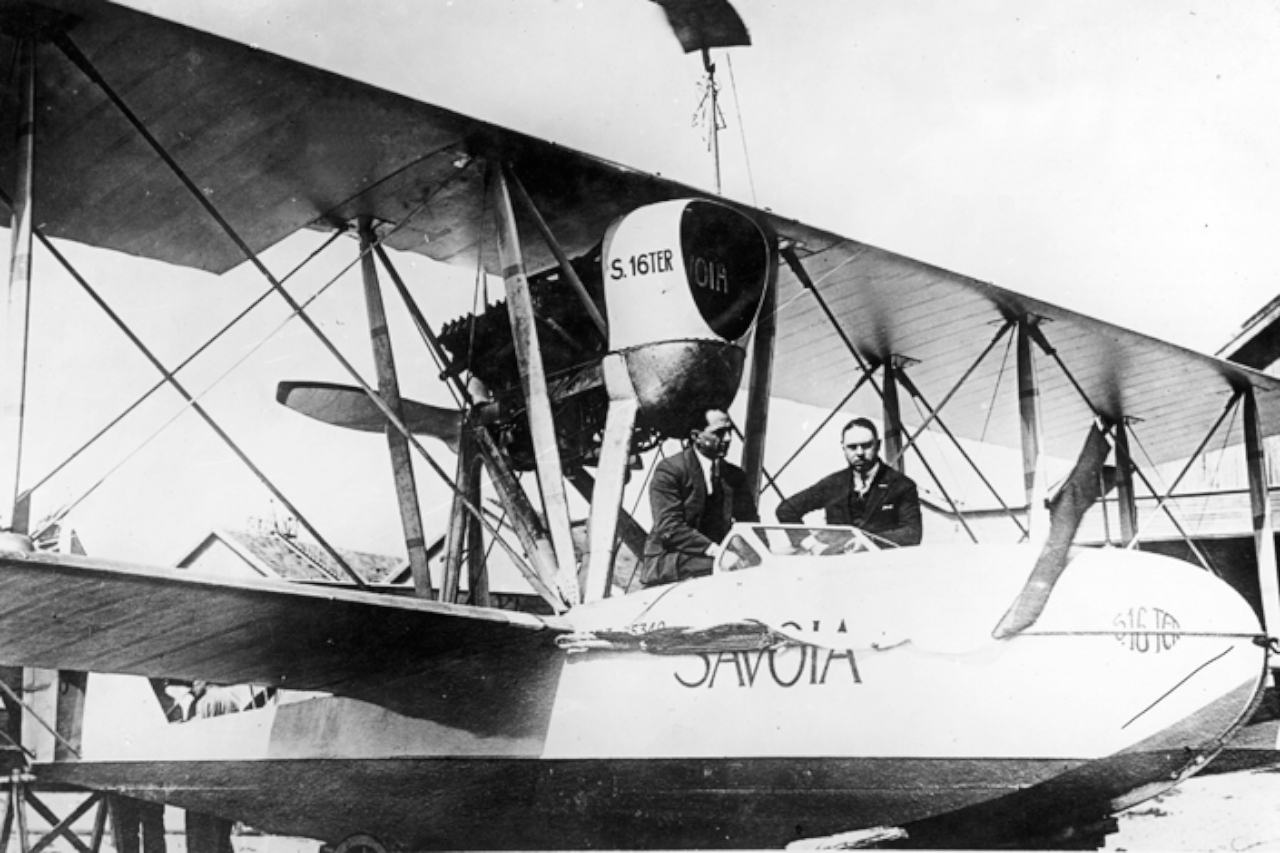
Idrovolante a scafo centrale, biplano, biposto da bombardamento leggero, monomotore. Di impostazione estremamente convenzionale con ali rettangolari con struttura in legno, rivestimento in tela e due coppie di montanti per parte, aveva un grande scafo in legno nella cui prua erano alloggiati pilota ed equipaggio. Il motore, che azionava un’elica quadripala spingente, era il Fiat A.12 bis da 300CV. Gli S.16 (versione “bis”) furono assegnati nel corso del 1923 alle squadriglie da bombardamento nelle stazioni idro di Brindisi, Lero, Napoli e Pola. Ebbe un notevole successo d’esportazione, con vendite iniziate ancor prima degli ordini militari italiani. Il principale acquirente straniero fu l’U.R.S.S.. La carriera degli S.16 (versione “ter”) si concluse presso la Scuola Osservazione Aerea di Taranto, dove cinque idro erano ancora in servizio nell’agosto del 1933.
Dati Tecnici (versione S.16bis M):
Lunghezza: 9,89 m;
Altezza: 3,67 m;
Superficie alare: 53 mq;
Peso a vuoto: 1.750 kg;
Peso totale: 2.450 kg;
Velocità massima: 165 km/h;
Autonomia massima: 5 ore.
Per approfondimenti consultare lo store Amazon dell’Aeronautica Militare al seguente link:
Questo sito utilizza cookie tecnici e analitici, anche di terze parti, per migliorare i servizi. Continuando la navigazione accetterai automaticamente l’utilizzo dei cookie.
This website uses cookies to improve your experience while you navigate through the website. Out of these, the cookies that are categorized as necessary are stored on your browser as they are essential for the working of basic functionalities of the website. We also use third-party cookies that help us analyze and understand how you use this website. These cookies will be stored in your browser only with your consent. You also have the option to opt-out of these cookies. But opting out of some of these cookies may affect your browsing experience.
Necessary cookies are absolutely essential for the website to function properly. These cookies ensure basic functionalities and security features of the website, anonymously.
Functional cookies help to perform certain functionalities like sharing the content of the website on social media platforms, collect feedbacks, and other third-party features.
Performance cookies are used to understand and analyze the key performance indexes of the website which helps in delivering a better user experience for the visitors.
Analytical cookies are used to understand how visitors interact with the website. These cookies help provide information on metrics the number of visitors, bounce rate, traffic source, etc.
Advertisement cookies are used to provide visitors with relevant ads and marketing campaigns. These cookies track visitors across websites and collect information to provide customized ads.