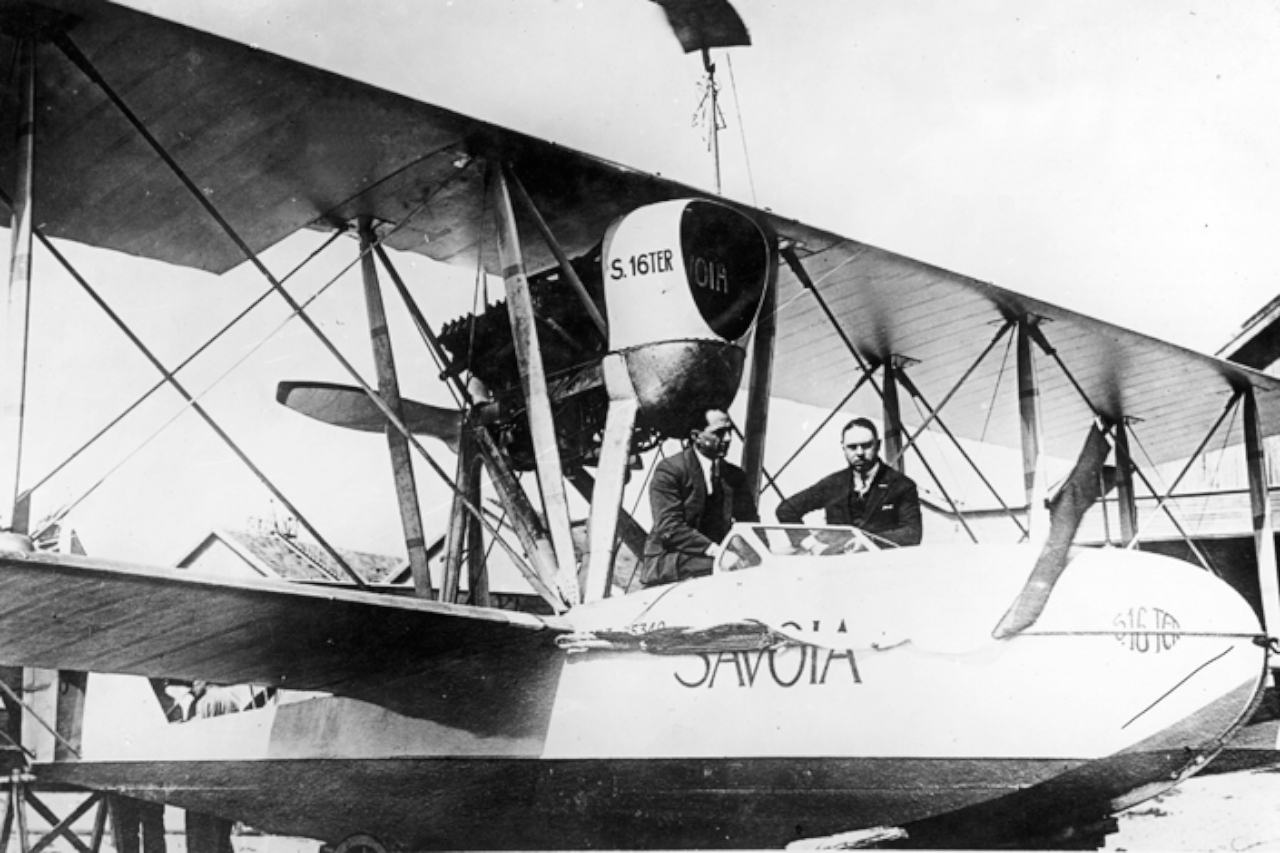
Central-hull flying boat, biplane, two-seat light bomber, single-engine. With an extremely conventional configuration of rectangular wings with a wooden structure, fabric covering, and two pairs of struts per side, it had a large wooden hull with the pilot and crew housed in the bow. The engine, which powered a four-bladed pusher propeller, was the 300 hp Fiat A.12 bis. The S.16 (version “bis”) were assigned in the course of 1923 to the bombing squadrons at the seaplane stations of Brindisi, Lero, Naples, and Pola. It enjoyed considerable export success, with sales beginning even before Italian military orders. The main foreign buyer was the U.S.S.R. The careers of the S.16 ( “ter” version) ended at the Air Observation School in Taranto, where five seaplanes were still in service in August 1933.
Technical Specifications (version S.16bis M):
Length: 9.89 m;
Height: 3.67 m;
Wing area: 53 sqm;
Unladen weight: 1,750 kg;
Total weight: 2,450 kg;
Maximum speed: 165 km/h;
Maximum battery life: 5 hours.
For more information, please consult the store. Amazon of the Italian Air Force at the following link:
This website uses technical and analytical cookies, including third-party cookies, to improve its services. By continuing to browse, you will automatically accept the use of cookies.
This website uses cookies to improve your experience as you navigate the website. Of these, cookies categorised as necessary are stored on your browser as they are essential for the working of basic functionalities of the website. We also use third-party cookies that help us analyse and understand how you use this website. These cookies will be stored in your browser only with your consent. You also have the option to opt-out of these cookies. However, opting out of some of these cookies may affect your browsing experience.
Necessary cookies are absolutely essential for the website to function properly. These cookies ensure basic functionalities and security features of the website, anonymously.
Functional cookies help to perform certain functionalities like sharing the content of the website on social media platforms, collecting feedback, and other third-party features.
Performance cookies are used to understand and analyse the website's key performance indicators, which helps in delivering a better user experience for visitors.
Analytical cookies are used to understand how visitors interact with the website. These cookies help provide information on metrics such as the number of visitors, bounce rate, and traffic source.
Advertising cookies are used to provide visitors with relevant advertisements and marketing campaigns. These cookies track visitors across websites and collect information to provide personalised ads.