The Air Force and Leonardo Divisione Velivoli present the state of the art on the implications of human error and its mitigations
in flight activities for students of the Aerospace Engineering course
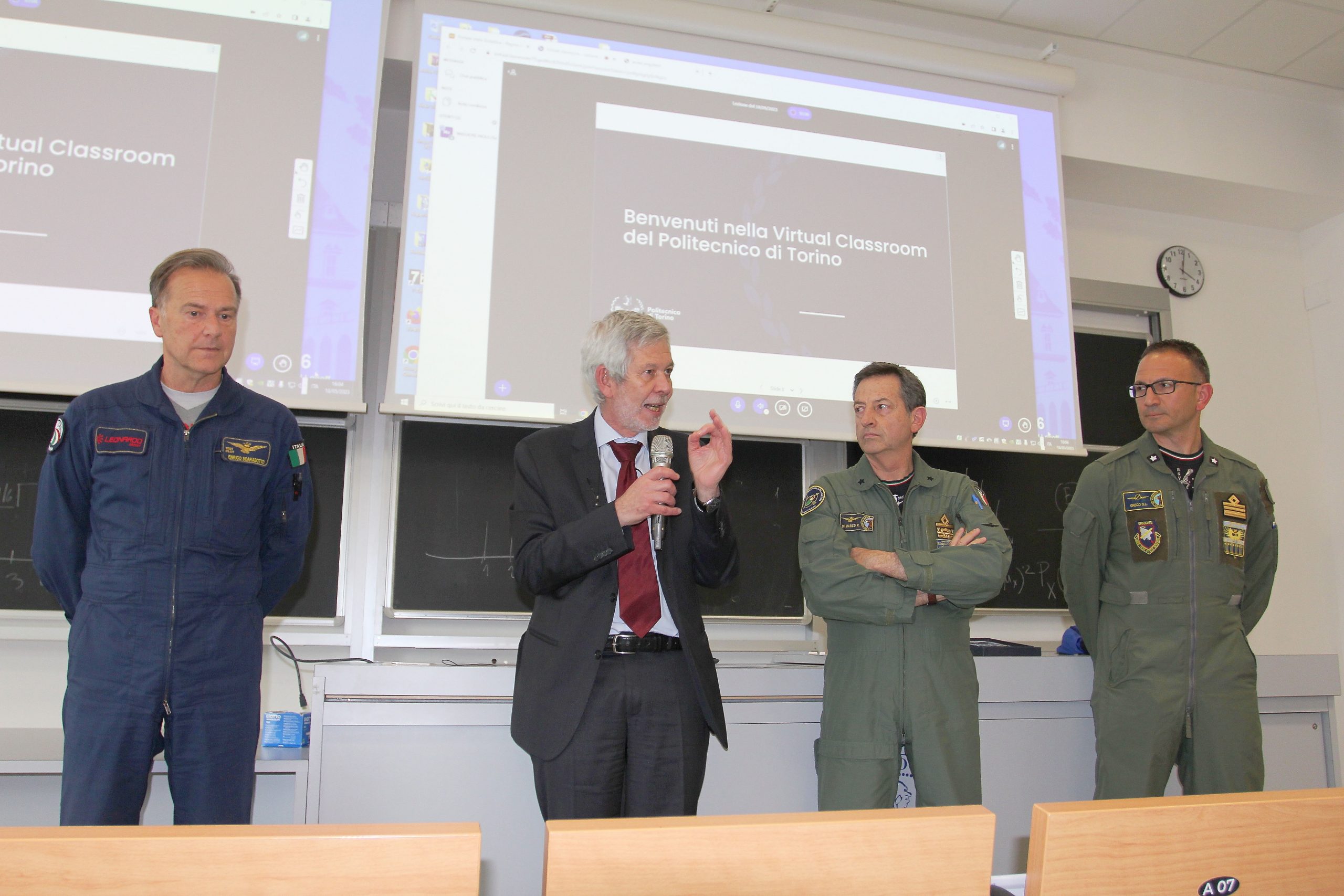
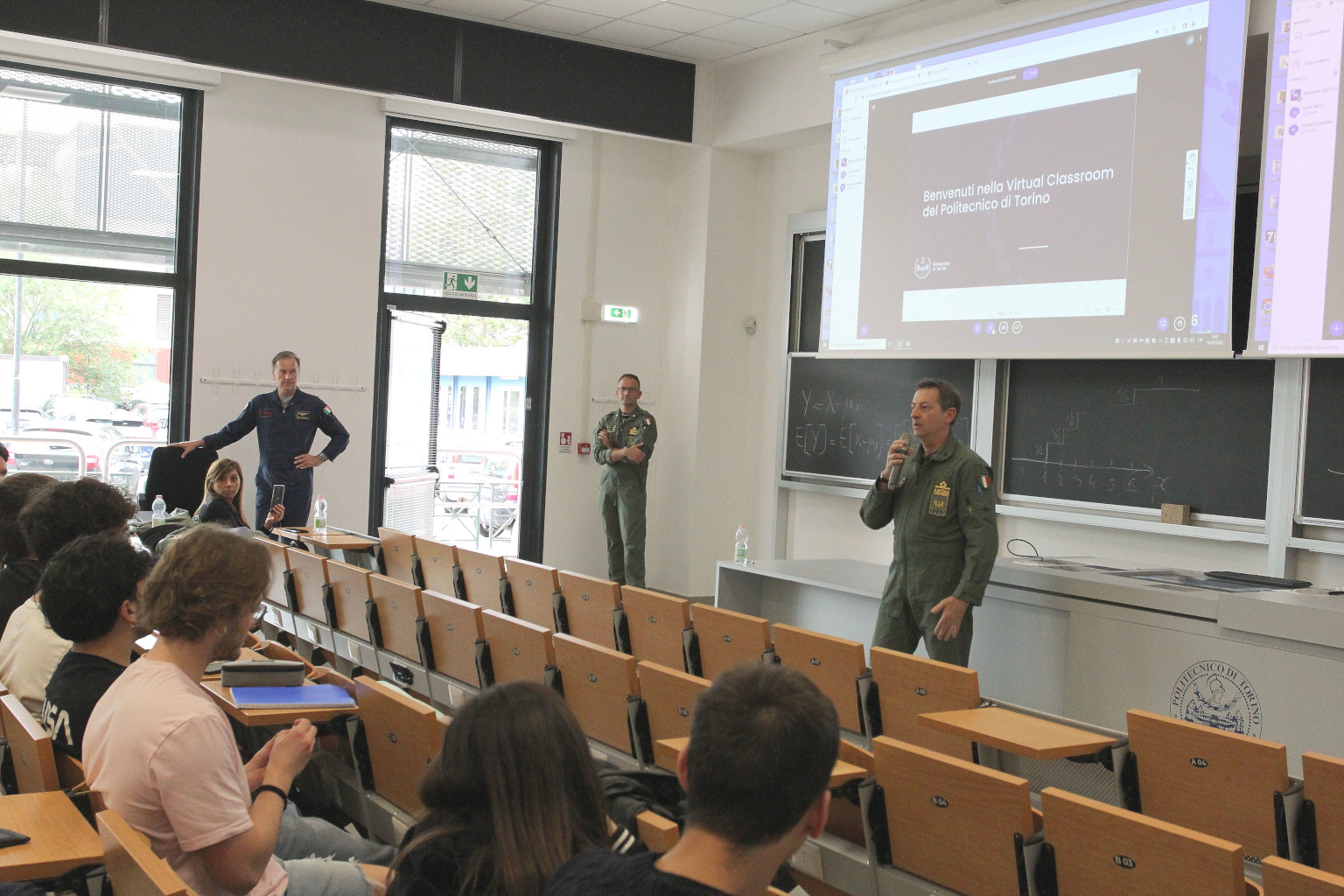
On May 18, at the Polytechnic of Turin, a joint session was held between the Aeronautica Militare and the Leonardo Aircraft Division to illustrate the implications of the human factor During flight operations, the students of the course Aerospace Engineering – second and third year of the three-year degree and final year of the specialist course, which in the coming years will be key players in professional fields with an aeronautical focus.
The speakers were Mr. Enrico Scarabotto, Safety Manager Leonardo Division of Aircraft, General B.A. Roberto Di Marco, Flight Safety Inspector of the Air Force and Lt Col Gian Luca Greco, experimental flight engineer and investigative technician of the Flight Safety Inspectorate, supported by Prof. Paolo Maggiore and Prof. Massimo Rossetto, Head of the Department of Mechanical and Aerospace Engineering.
Mr. Scarabotto, after presenting a case study regarding an incident that occurred on the experimental aircraft X-31 of the NASA, he emphasized the importance of appropriate Safety Management System (SMS) to ensure the training necessary for the staff, with particular attention to the aspects of Crew Resource Management (CRM), Communication and sharing of information, indispensable within the framework of Safety Risk Management and in prevention.
Subsequently, he highlighted how proper management of all aspects related to the Human Factor plays a fundamental role in preventing accidents.
He finally presented the SMS in the context of Leonardo Divisone Velivoli, citing some examples of inconveniences related to the Human Factor, concluding the dissertation with the concepts of Safety Culture e Just Culture, Key elements for achieving the objectives of Flight Safety in any organization.
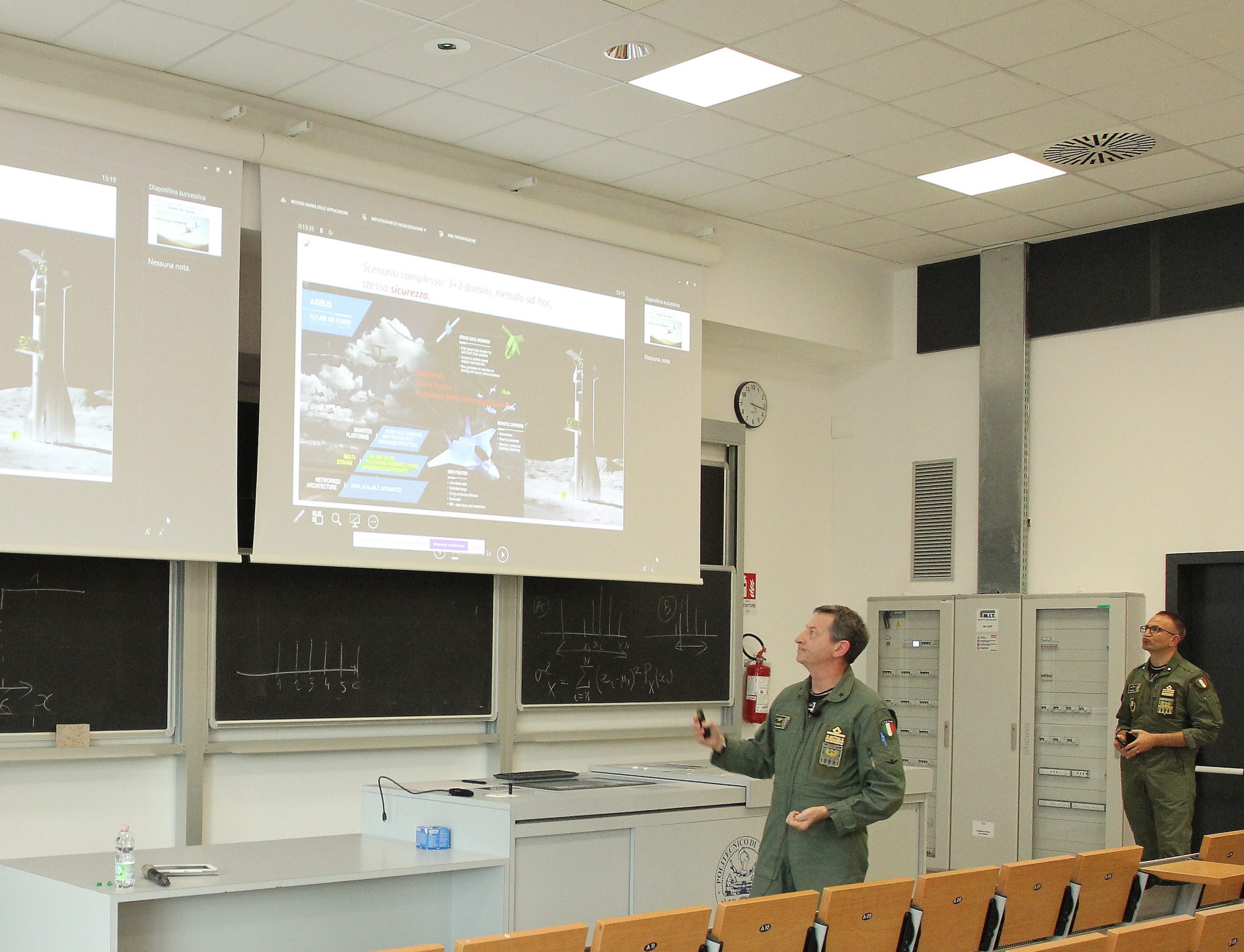
The intervention of Gen. Di Marco began with the presentation of Mission of the Air Force, emphasizing that the activities of the Armed Forces They are not limited to just Defense and Security, However, they include operational support interventions in various areas, in collaboration with the competent government agencies, especially in the event of a national emergency or environmental disasters.
In these circumstances, the aircraft and command and control systems of the Air Force directly contribute to managing and containing the emergency itself, providing support both at the level of mapping the territory to detect the affected areas in real time, and for the recovery of people or objects, together with the management of any health-related emergencies.
General Di Marco then introduced the concept of cross-sectional safety, considered a requirement naturally included and shared in all human activities. He therefore discussed the Human Factor as an element to be considered in the performance of any activity and, consequently, the importance of the principle of Just Culture, A fair and transparent approach that strengthens a sense of responsibility: it is an organizational approach in which frontline workers are not sanctioned for actions, omissions, or decisions they take based on their experience and training, but in which serious negligence, intentional violations, and harmful actions are not tolerated.
A follow-up was carried out excursion on the programs and Partnership at the European and extra-European level, with systems and aircraft at the center, which, despite increasingly modern and sophisticated technology, will probably never be so perfect as to completely rule out the potential for human error. The General concluded by highlighting how Flight Safety must always be understood in the service of Mission of the organization, because if it were disconnected or remained abstract, it would be completely useless: the risks of an activity must be known and mitigated, and the residual risk, if accepted, must be appropriately managed.
Lt Col. Greco closed the session by introducing the link between Technical and Human Factor, As a starting point for prevention activities even in the context of test flights. In describing the findings of investigations into certain aviation accidents, he emphasized that the priority of an investigation is the identification and understanding of the causes rather than the search for individual responsibilities, and he highlighted how often the accidents were caused by a lack of proactive risk control.
Referring to the activities of the flight test, he also emphasized that in order to avoid being in particularly critical conditions, it is good to recognize and avoid the so-called Exploring the unnecessary and, in this context, the Safety Risk Assessment It represents an indispensable methodology in the identification of risks and the related mitigation procedures.
Managing a trial campaign is in fact extremely complex, resulting from a strong interaction between the technical and operational parts. For this reason, the risk elements must always be known, monitored, and taken into account at the planning stages. decision-making with an appropriate one Risk Management. In this context, the human component is an integral part and, as such, must be highly considered.
At the end of the meeting, all the speakers clearly stated how important it is, even in the university context, to deepen the concepts presented in order to foster a more aware, proactive, available and attentive approach to all aspects related to safety in the world of work.
The participation of the Air Force in this conference is part of the framework of the various initiatives undertaken by the Ministry of Defense. Safety Promotion Organized by the Inspectorate and the Higher Institute for Flight Safety on the occasion of the Centenary of the Air Force, which during this year have been oriented towards the Institutes known as “Aeronautical” and the University Colleges to disseminate the culture of Flight Safety to the girls and boys who will come in the coming years into direct contact with aeronautical activities.