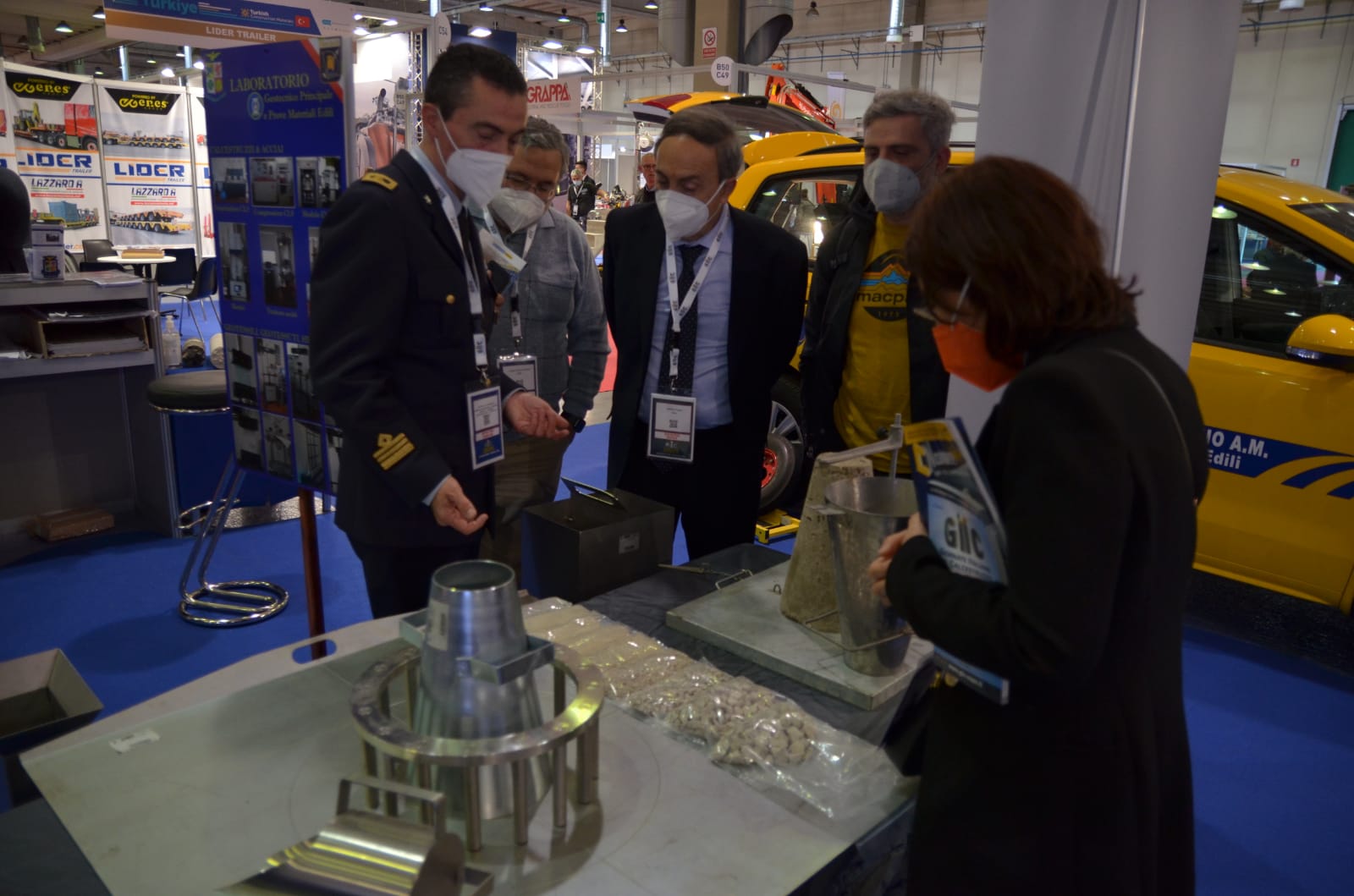
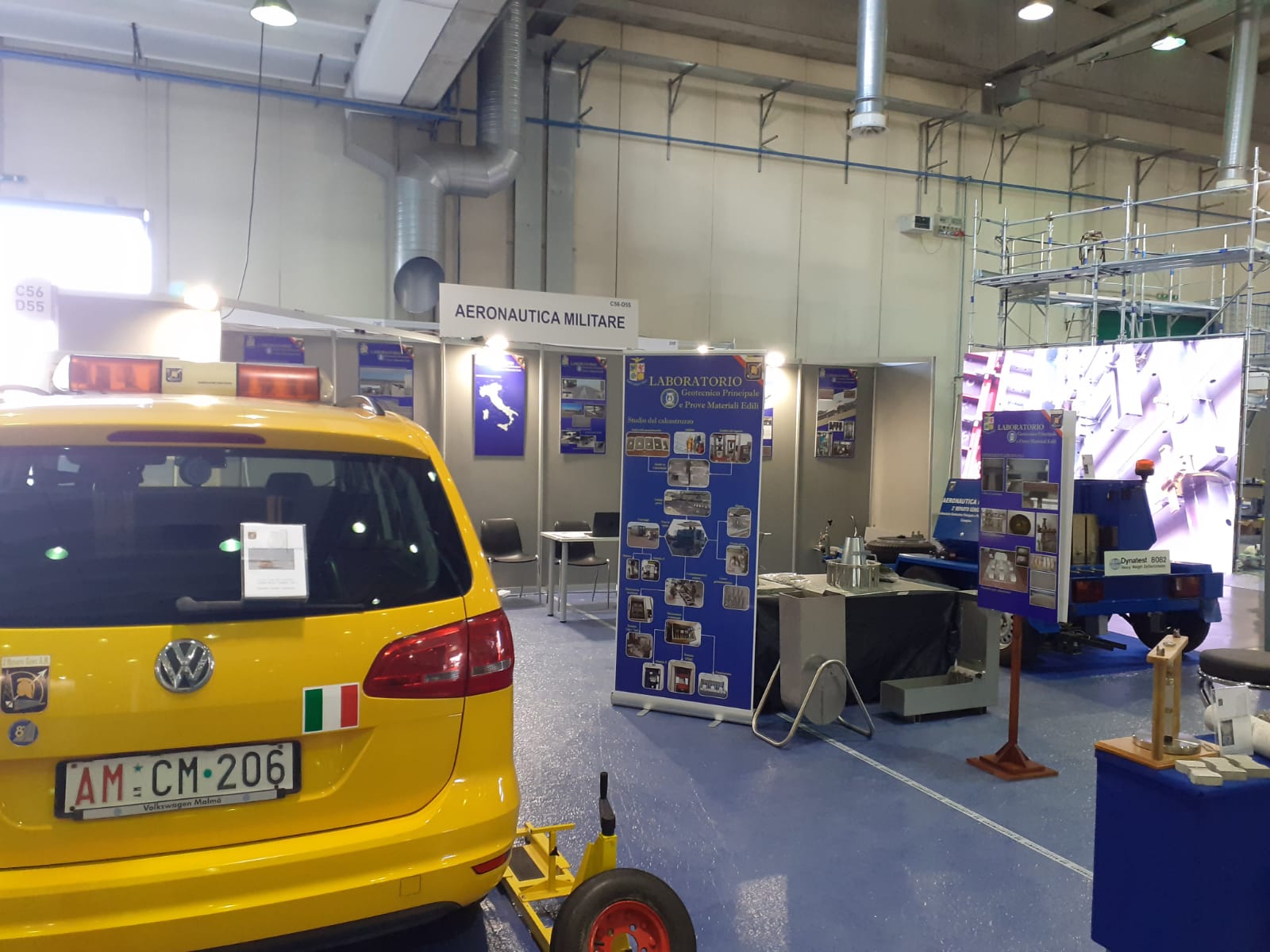
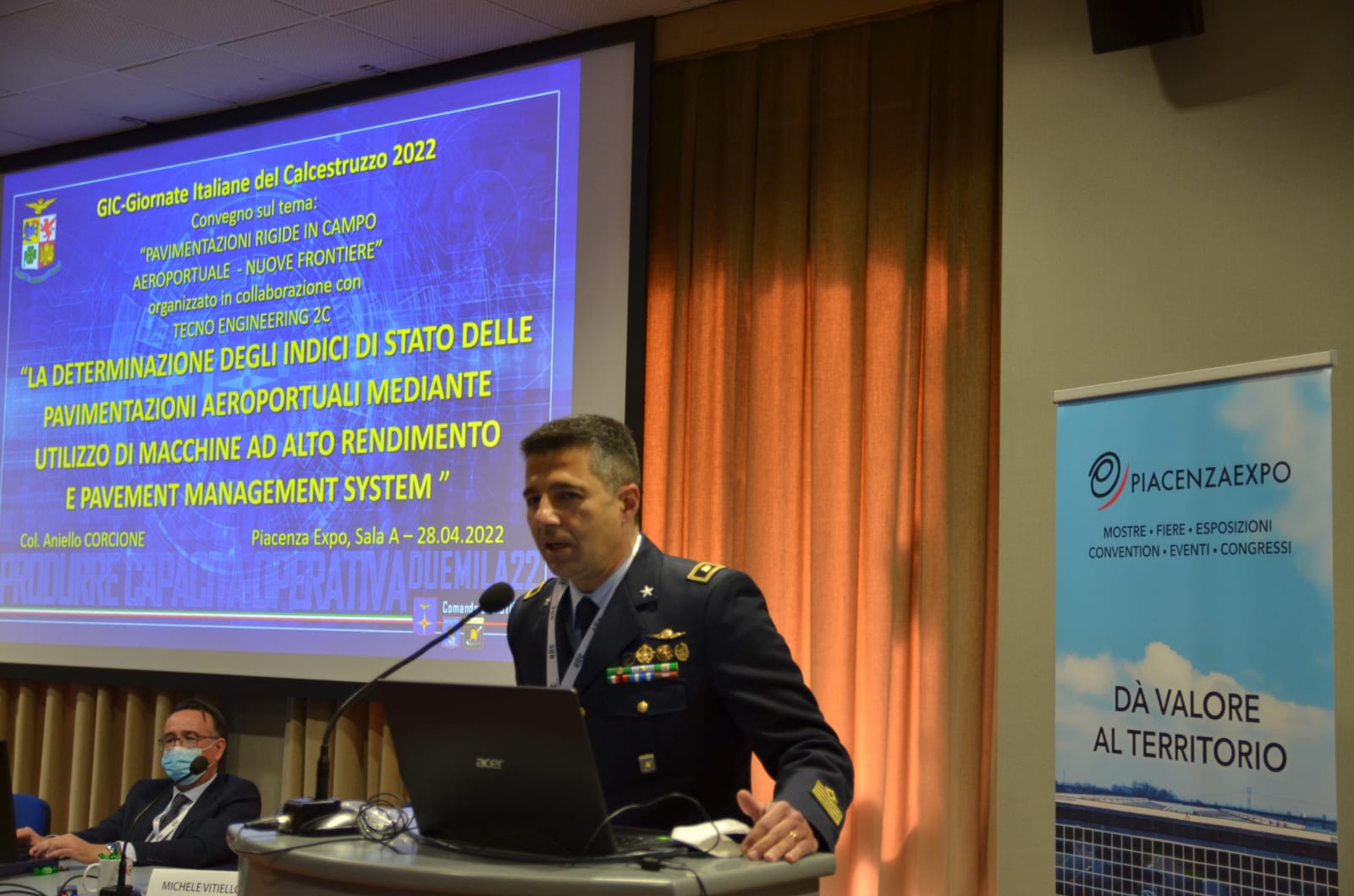
During the three-day event, held at Piacenza Expo, the Armed Force's cutting-edge capabilities in airport infrastructure maintenance were highlighted.
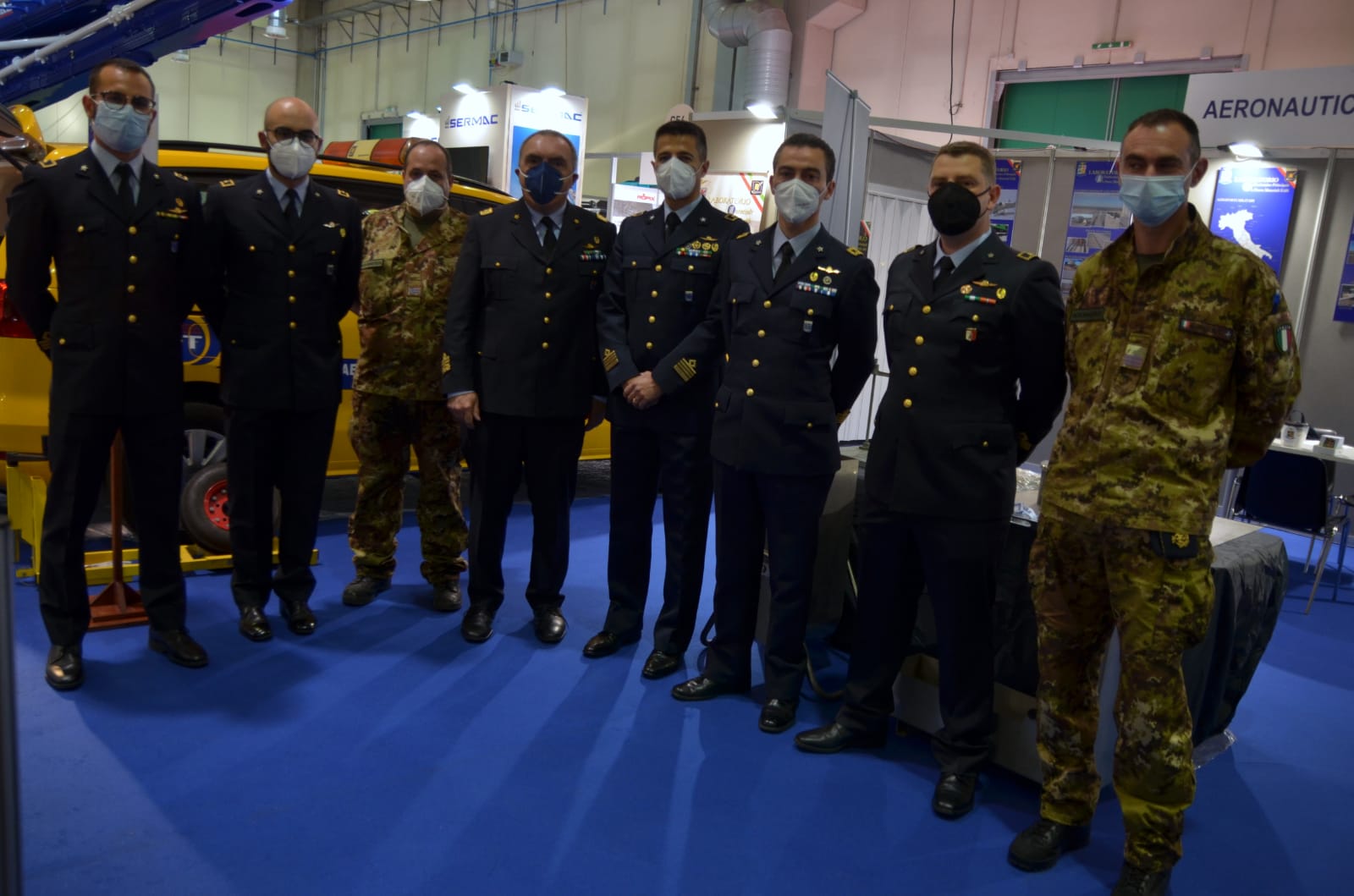
Saturday 30 April saw the conclusion of the three-day fourth edition of the “Italian Concrete Days” trade fair and exhibition at PIACENZA EXPO, an international event dedicated to construction technologies and the concrete industry. The Italian Air Force, which can boast a vast heritage of concrete airport pavements and one of the highest know-how organisational and managerial through personnel from the Field Genius Groups, as in previous editions, a large exhibition stand has been reserved.
The Infrastructure Service of the Air Force Logistics Command showcased specialised equipment used for the high-performance survey of airport pavement characteristics and conditions, with the aim of programming planned maintenance interventions and supporting airport certifications. This capability is guaranteed. indoors from the Main Geotechnical and Building Materials Testing Laboratory of the 2nd Air Force Engineering Department, Ciampino.
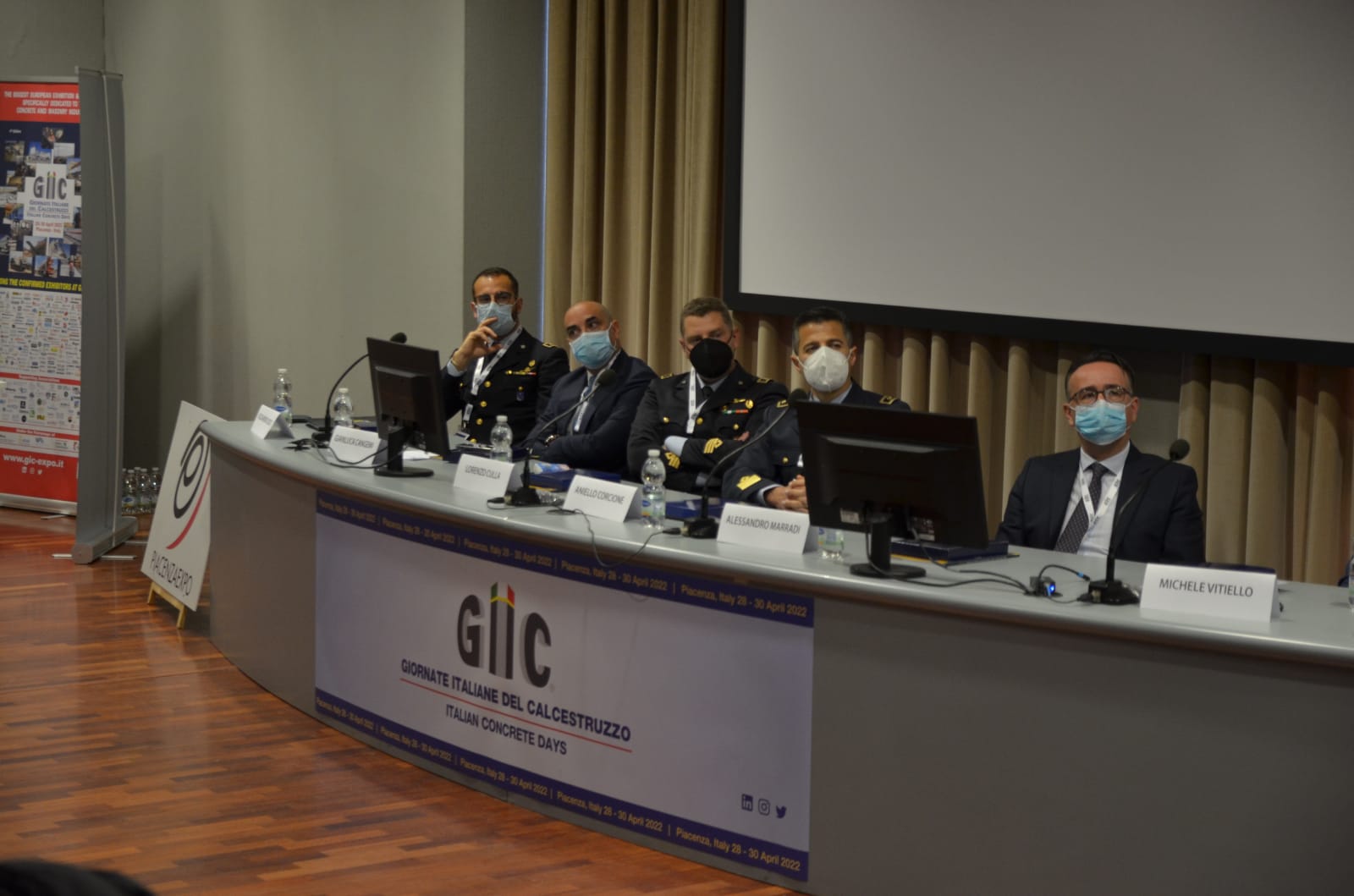
On 28th April, as part of the same event, a conference titled “Rigid Pavements in the Airport Field – New Frontiers” was held, organised by Tecno2C Engineering. The Italian Air Force was invited to illustrate its experience and share its know-how within the scope of airport pavement management, monitoring and maintenance.
The conference was opened with an inaugural address by General Inspector Giancarlo Gambardella, Director of the Directorate of Works and State Property, a branch of the General Secretariat of Defence that oversees all activities connected with infrastructure enhancement. In his speech, the Director highlighted some fundamental and preceding points for the achievement of one of the main objectives of the Ministry of Defence, namely the rationalisation of the infrastructure park, which must involve the creation of more functional structures, the containment of operating costs, creating growth opportunities for the country system through the relaunch of quality construction, increased employment and the enhancement of state assets.
All of this, stressed Gen. Insp. Gambardella, will be possible especially by looking to the outside world, to the public sphere, with firstly universities, and to private ones with businesses Leader in specific sectors. At the heart of everything, however, there must be a step change: from the logic of technology transfer to technological cooperation, where researchers from Defence, businesses and universities will have to work together on objectives of common interest.
Subsequently, Colonel Aniello Corcione, Commander of the 2nd AM Engineering Department, introduced the presentations by technical personnel from the Air Force, who were tasked with illustrating activities and experiences on the subject. In particular, he highlighted that “the Air Force, with 26 airfields and 6.5 million square metres of airfield pavements, of which 2.5 million are concrete, is in fact the largest airport management company in Italy. With the aim of maintaining and monitoring such a vast infrastructural asset and ensuring the continuous operational capability of the Armed Force, the Infrastructure Service of the AM Logistic Command has equipped itself in recent years with high-performance machinery for the rapid surveying of all flight surface condition indices. This activity, carried out by the Materials Testing Laboratory of the 2nd Engineering Department, enables the prompt certification of the existence of the necessary safety parameters for the authorisation of military flight operations by the Armed Force's Command.”.
Next, Lt. Col. Antonello Germinario, deputy head of the Testing Laboratory, highlighted how this sector expertise fits into an increasingly optimised management of resources allocated to maintenance, which is capable, through the development of adequate forecasting models and the implementation of a Airport Pavement Management System, to identify the real vulnerabilities of the infrastructural network, minimise intervention costs, and ensure appropriate performance parameters in accordance with ICAO regulations, ENAC regulations, and Armed Forces directives.
In subsequent interventions, Captain Lorenzo Culla of the 3rd Air Force Engineering Regiment illustrated the case study of the design and construction of a Vertical Landing Pad, made of concrete resistant to the extremely high temperatures associated with operations Short Take-Off e Vertical Landing aircraft – so-called vertical take-off – and Capt. Alessandro Oddo of the 1st R.G. A.M. proposed the case study of the requalification of the main runway at Ghedi Airport.
In the afternoon, among other prestigious interventions by civilian speakers, Lieutenant Rosario Salzillo (2nd R.G.A.M.), as part of the ongoing institutional collaboration between the Air Force and Sapienza University of Rome for the development of a Second-Level University Master's degree in Airport Infrastructure, presented his Master's thesis on the technical-economic analysis and a proposal for a catalogue for airport pavement maintenance.
The participation of the Air Force in the event has generated considerable interest among stakeholders interventions, both during the conference sessions and at the exhibition stand, also projecting externally the identity of an increasingly efficient and specialised Armed Force, attentive to the correct management of economic resources to be employed and focused on continuous improvement.