From November 6 to December 7, 2023, the 90th “Information Operations Officers” (A.I.O.) Course was held, organized by the Air Squad Command (CSA).
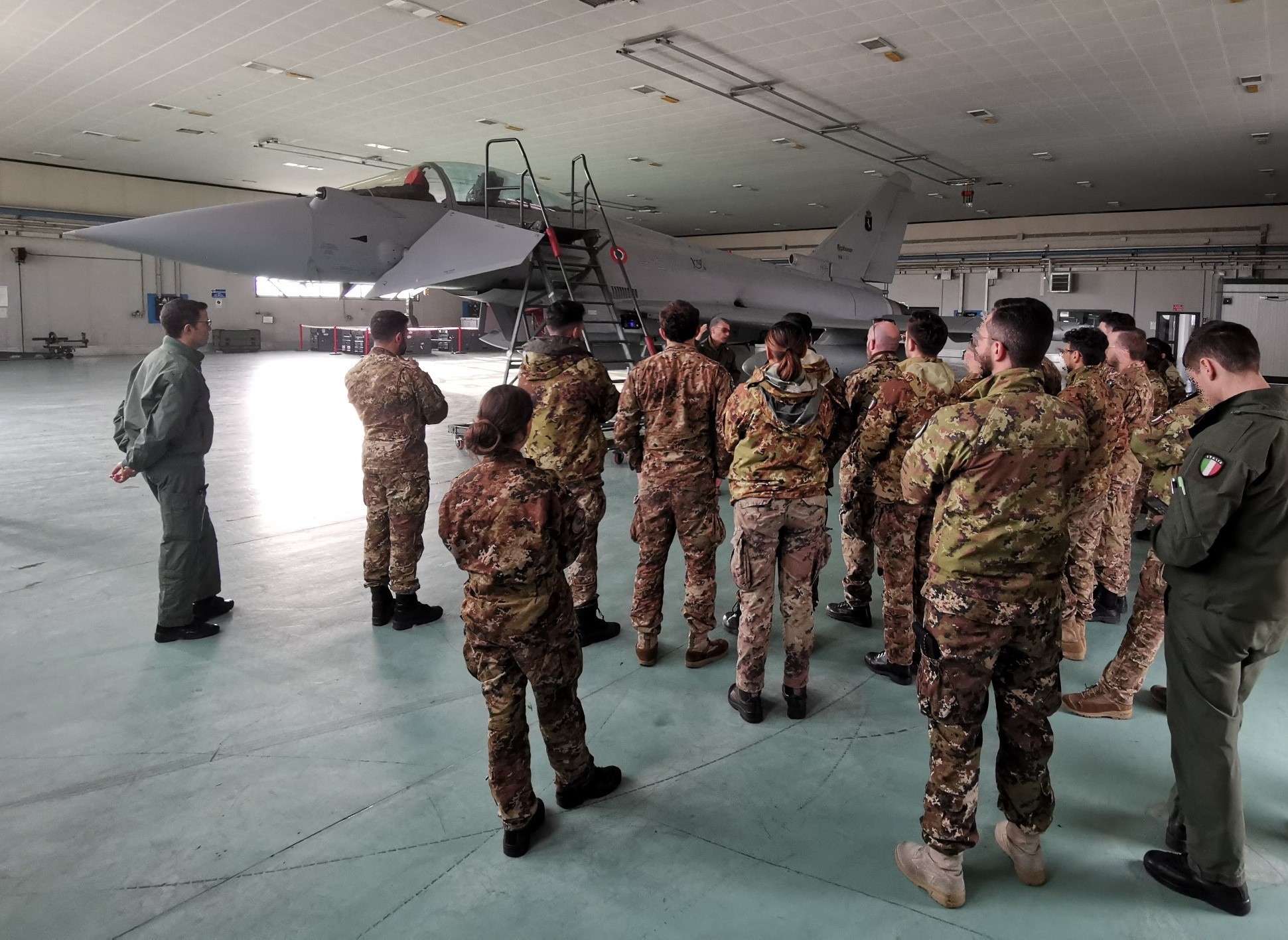
The 90th edition of the “Information Operations Officers” Course” (A.I.O.) was held for the first time in a traveling format at the headquarters of the Aerospace Operations Command(COA) of Poggio Renatico, of the School of Aerial Cooperation (SAC) of Guidonia and the 9th ISTAR-EW Air Brigade at Pratica di Mare.
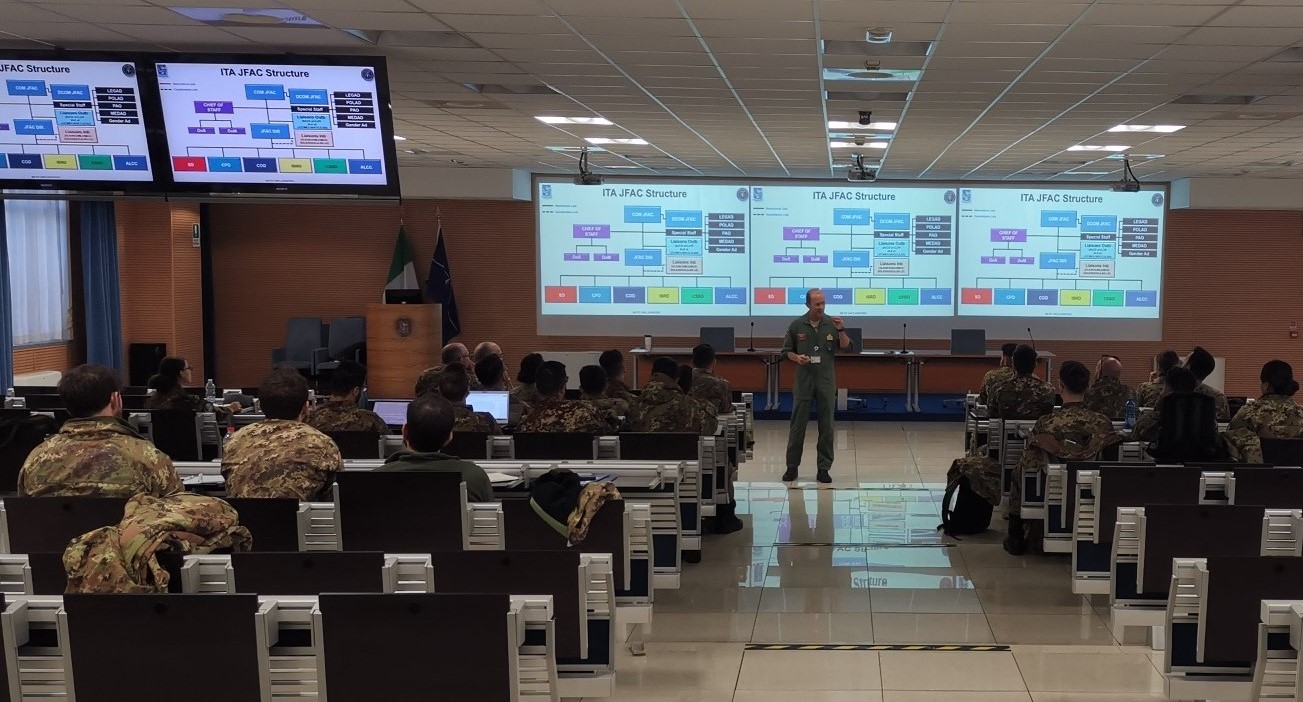
The new format has allowed attendees to experience a complete and engaging educational experience, interacting with the most experienced instructors from the Armed Forces and visiting the key organizational elements with which they will interact in the future of their careers (COVI, COFS, COA, CII, CITS, Stormi di Volo, CIGA and ReSTOGE) in order to increase the effectiveness of the lessons and the general understanding of aerospace operations and the ISTAR-EW sector.
In accordance with the reference directives published by Air Staff, The course is aimed at staff of the’Italian Air Force which begins the professional path in the intelligence sector, belonging to the “Operations” Category and the “Information and Security” specialty for Officers and the “Information and Cyber Operations” for Sub-Officers, Graduates, and the Regular Army.
The AIO course represents the conclusion of a training program that lasts approximately five months in total, consisting of specialized modules on intelligence, ISR, electronic warfare, remote sensing, and the recognition of air, ground, and naval weapon systems.
This process aims to provide selected personnel with the key tools to perform their information gathering tasks at various levels of employment (e.g., support to Flight Departments, Specialized Departments, Intermediate Commands, and Operational Commands), in the various phases of the Intelligence cycle and ISR processes. Upon acquiring the “intelligence” qualification at the end of the training process, personnel undergo a period of on-the-job training (OJT) at the assigned Department before being able to be employed operationally.
The educational activity, planned and coordinated by the ISTAR-EW Office of the CSA, was carried out by teachers and instructors from FA and inter-service entities such as the General Staff of the Defense (SMD), the Air Staff (SMA), the Inter-Service Operations Command (COVI), the Inter-Service Command for Special Operations Operations (COFS), the Air-Space Operations Command (COA), the Inter-Service Intelligence Center (CII), the Italian Army’s Information Brigade (BIT), the 9th Air Brigade ISTAR-EW, the Inter-Service Satellite Telecommunications Center (CITS), as well as by subject matter experts from the CSA’s Departments (4th Flight Wing, 14th Flight Wing, 17th Flight Wing, RACSA, ReSTOGE and CIGA) and the Logistics Command (ReSIA and ReGISCC). The course content, the practice phases and the teaching methodology have been updated based on the technological and geostrategic developments of the last few months, as well as on the feedback received from the participants of previous editions.
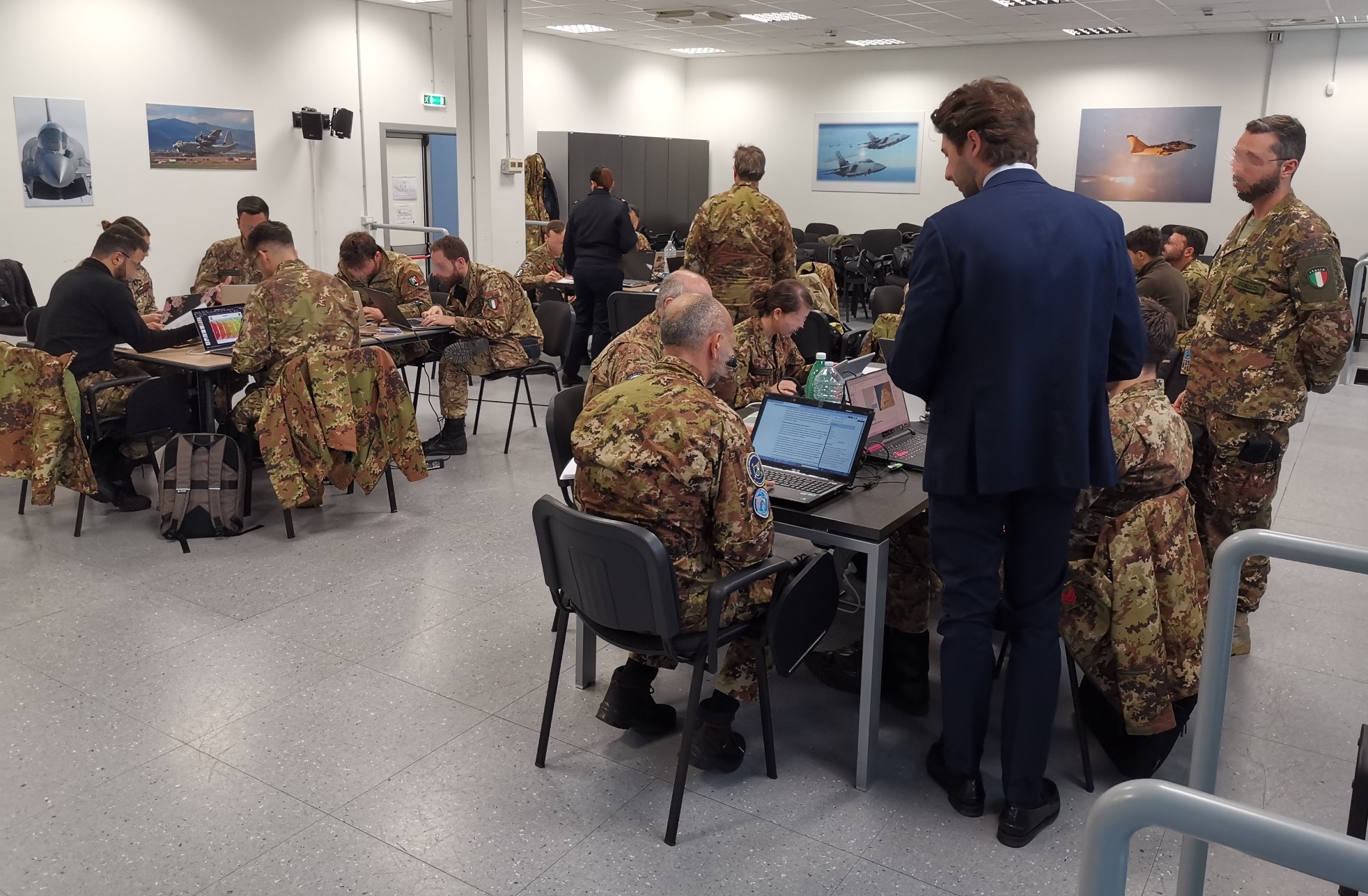
The additional new features introduced in the recently concluded edition include guided visits to Armed Forces and Inter-Forces Agencies, the introduction of interventions regarding communication techniques and public speaking, lessons and in-depth studies in the cyber and aerospace sectors, as well as the interventions of national intelligence personnel deployed abroad at NATO headquarters and the European Union and in the Operational Theatres. For the first time, the final exercise conducted at the end of the educational activities was carried out with the support of the Janes company, which made its Open Source Intelligence platform and IT tools available to the participants to carry out the tasks required by the exam tests based on the reference scenarios assigned to the individual working groups.
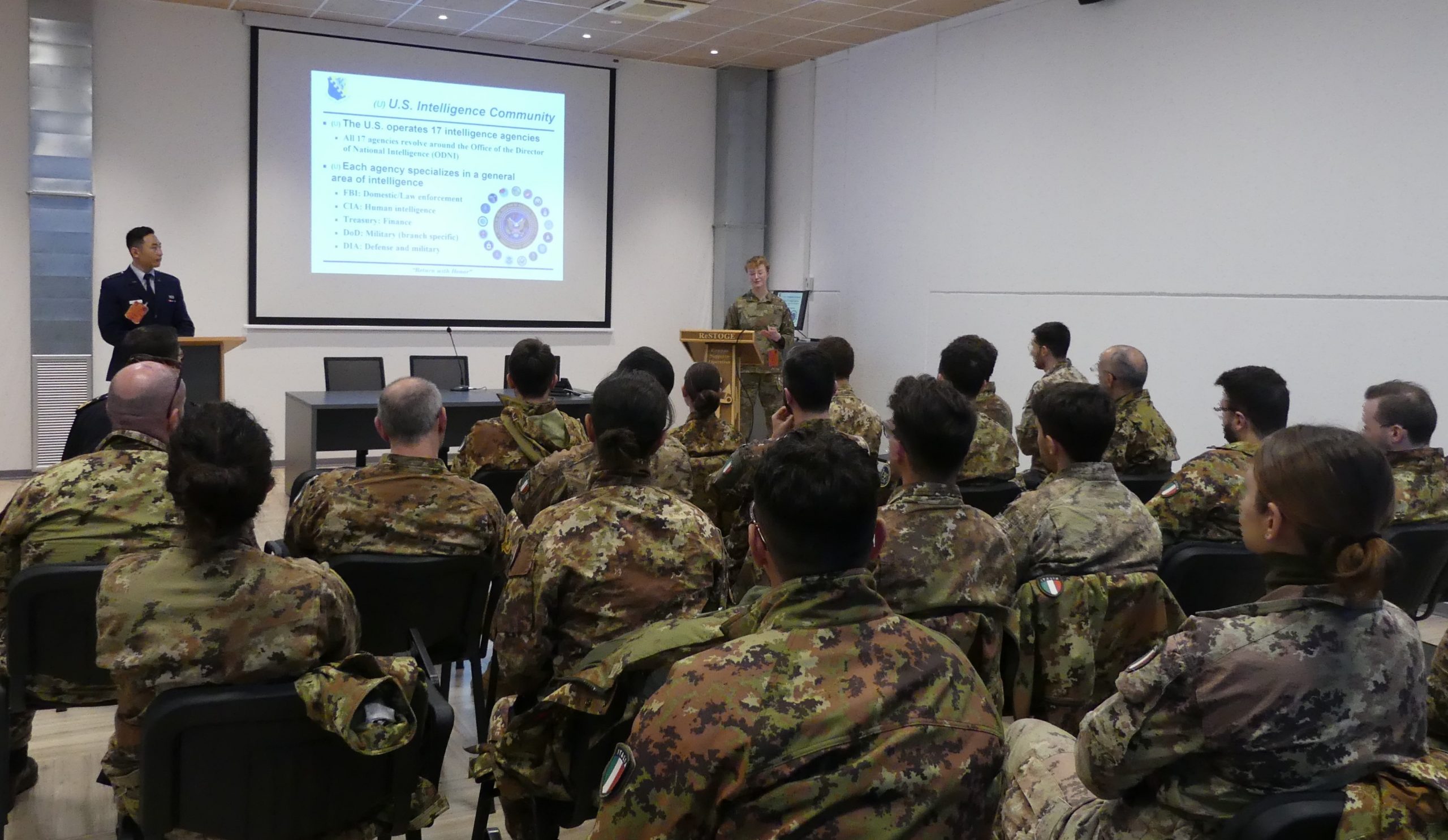
The intervention carried out by the US intelligence personnel based at the 31st Fighter Wing in Aviano was particularly effective and appreciated. The US personnel provided a comprehensive and in-depth description of the tasks and responsibilities of the intelligence personnel in the US Air Force (USAF) flight units, sharing interesting insights regarding the training paths and personal experiences gained in the field during numerous operational deployments. This intervention, strongly shared by the US Military authorities, marked the beginning of a new and important collaboration in the training field aimed at further enhancing the training courses, the interoperability of ISR systems, and the standardization of procedures.