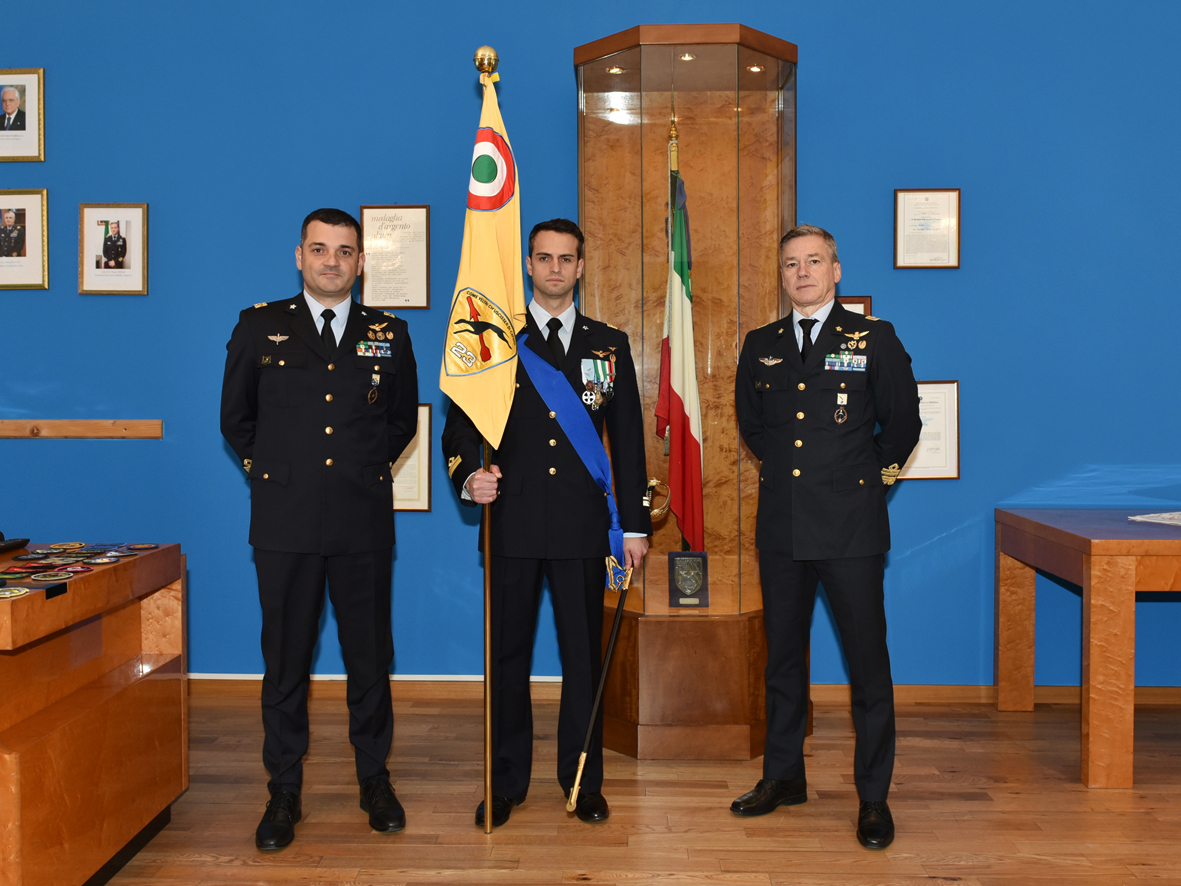
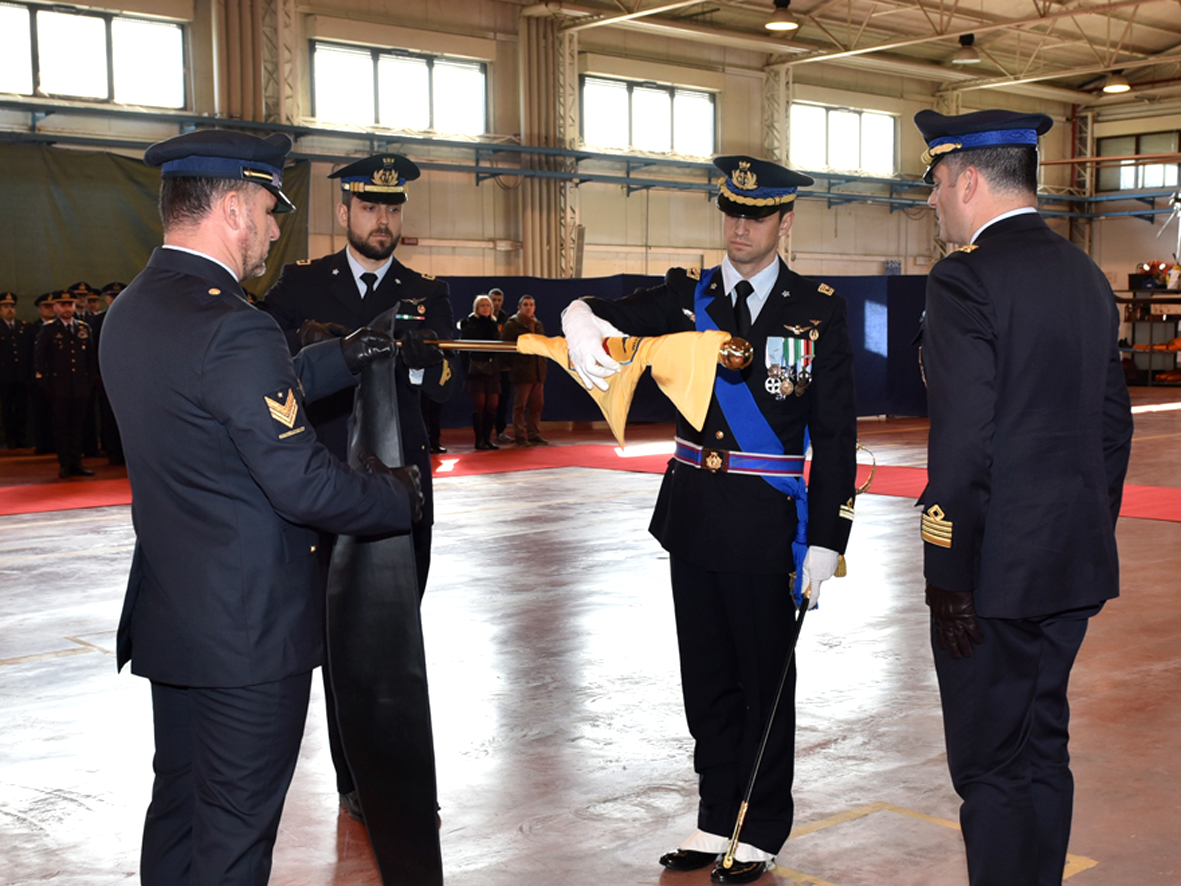
On Tuesday 14 February, at the military airport of Pisignano di Cervia, seat of 15th Wing, the box-positioning ceremony of the 23rd Flight Group, a unit inheriting the most noble traditions of the Italian Air Force. The “Ventitrè”, established in 1918, was immediately a protagonist in the skies of the Great War and the valour of its crews was later confirmed in the Spanish Civil War, the Second World War and, more recently, in the Balkans.
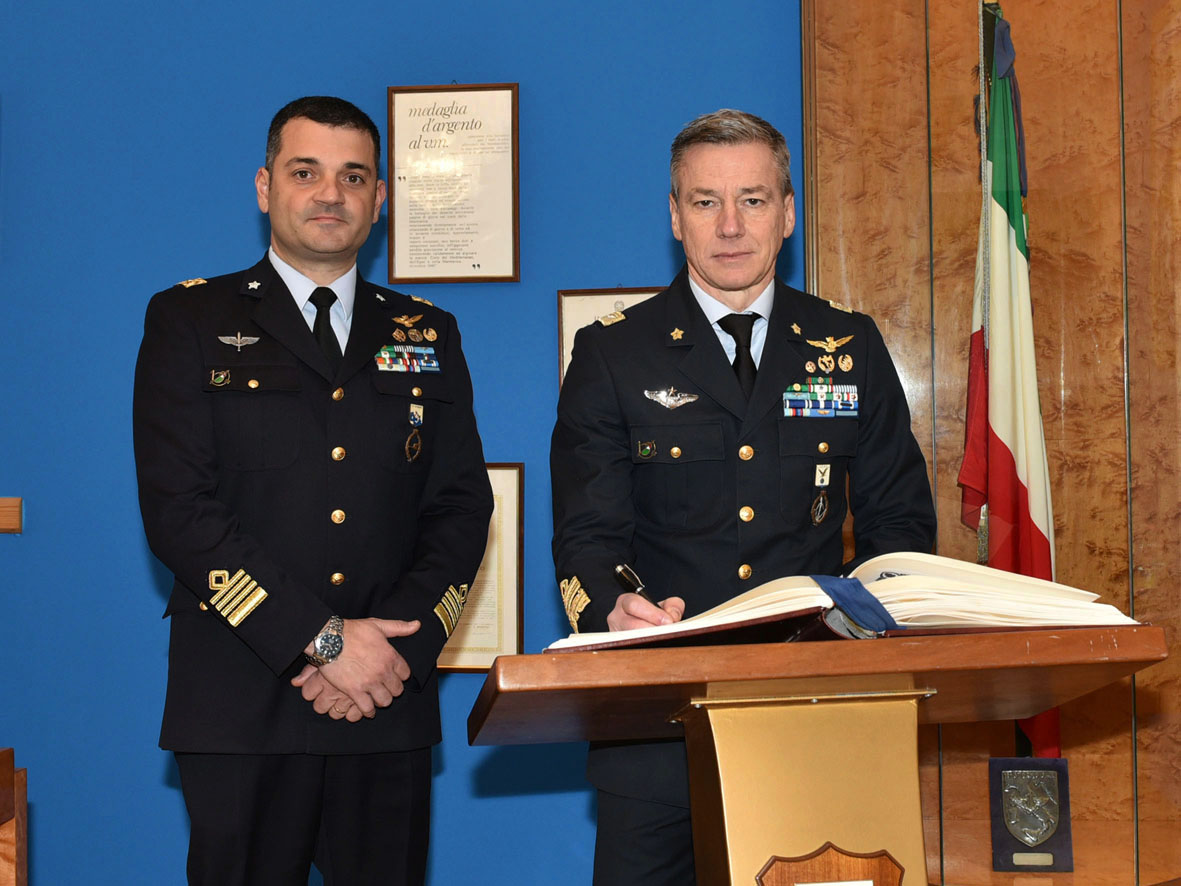
The event was attended by Commander of the Mobility and Support Forces Command (CFMS), Air Division General Enrico Degni, of Commander of the 15th Wing, Colonel Andrea Giuseppe Savina, and of Officer Commanding the 23rd Flight Squadron, Major Simone Moroni.
The ceremony took place inside the hangar of the 83rd SAR Group (Search and Rescue, Search and Rescue) and saw the participation, as well as a military representation of the Unit, of the combatants' and veterans' associations of the province of Ravenna and of Forlì-Cesena.
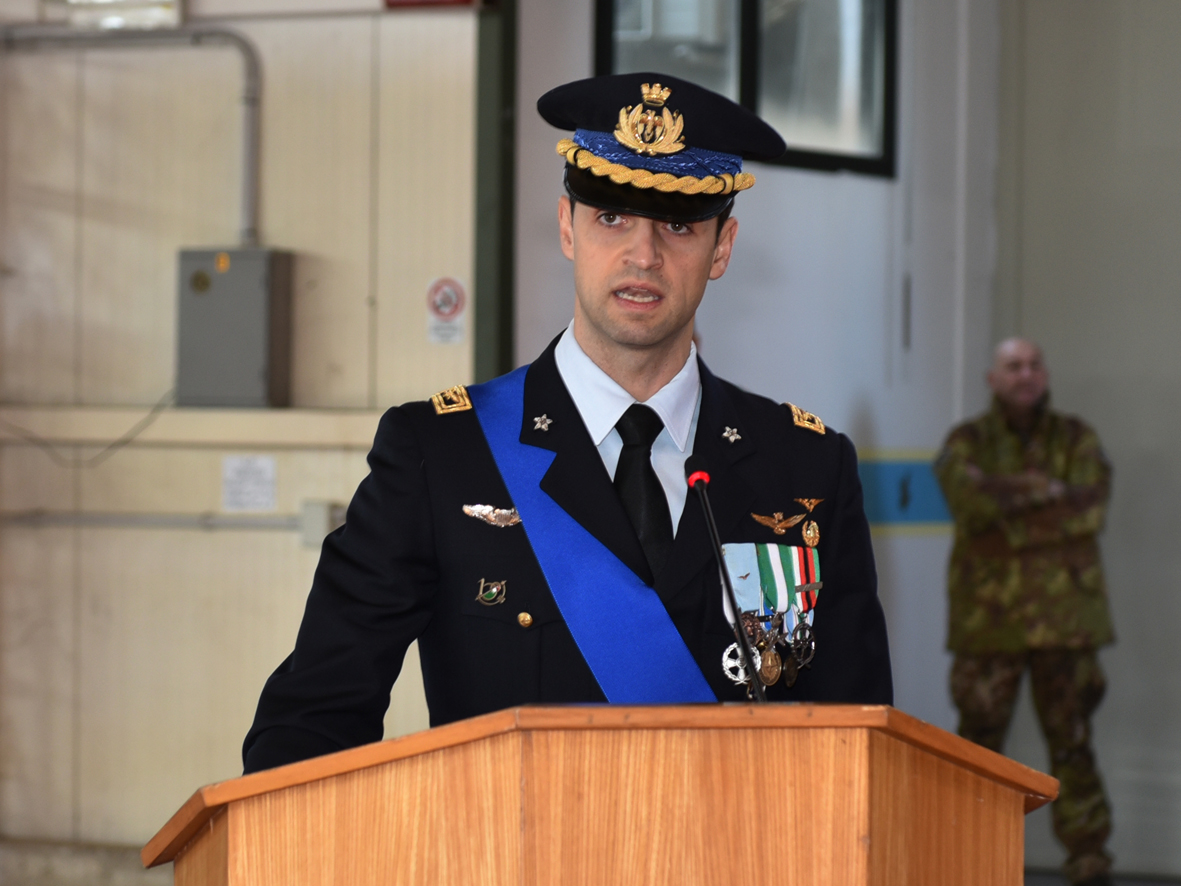
During his speech, the Commander of the 23rd V.G. Squadron, Maj. Moroni emphasised how: “It Veltro he was on the front line during Operation “Allied Force” in the former Yugoslavia, as part of which he carried out the first real Italian scramble and, in recent years, in the complex context of readiness related to Special Operations Support and Personnel Recovery. First, moreover, to intervene in the health crisis caused by Covid-19”. He then continued, addressing his staff: “Go forwards with your heads held high, with the pride that comes from knowing you gave everything, professionally and personally”.
Next, the Commander of the 15th Wing, Colonel Savina, which highlighted how: “The 23rd Flight Group, a symbol of glorious and significant pages in the history of the Italian Air Force, supported by the numerous awards with which it has been decorated, has always managed to assert its role within the Armed Force over time, even when, in 2018, it was re-established within the 15th Wing with a new mission: Personnel Recovery associated with Air Support for Special Operations. No less important was its deployment in the transport of patients in bio-containment during the peak of the pandemic period”.
Finally the General Degni she wanted to emphasise the centennial history that has made the 23rd G.V. a protagonist, in an important year like 2023, which marks the centenary of the Italian Air Force: “Over the course of these 104 years, even if not continuously, the 23rd Group has played a leading role in the major chapters of our history: from its establishment as an independent Armed Force to the Second World War, from its rebirth to the peace dividend years, passing through the Cold War, and arriving at the latest mission entrusted to the group, namely Personnel Recovery and Special Operations Support. Through its history, we also retrace and celebrate that of our Armed Force, in the year of the Centenary”.
At the end of the ceremony, the standard of the 23rd Flight Group was placed back inside its case, a symbolic gesture representing the temporary placement of the Group in a cadre position.
23rd Flight Group
Established at S. Luca di Treviso on 7 July 1918 with Hanriot HD.1s and Nieuport Ni.11s, the 23rd Fighter Aeroplane Group took part in the main operations during the final period of the First World War. It was one of the few units not to be demobilised at the end of the conflict. In the following years, the 23rd was redeployed to various airfields in Lombardy and Piedmont, subordinate first to the 2nd and then to the 3rd Stormo, being equipped with Nieuport 29s (1925), CR.1s (1926), Ansaldo AC.3s (1927), CR.20s (1929), CR.32s (1935) and CR.42 “Falco”s (1939). From 1937 to 1939 it took part in the Spanish Campaign. In June 1940, upon Italy's entry into the Second World War, the Group operated against French forces; the following month it was redeployed first to Sicily, where it began a demanding cycle of operations against Malta, and then to North Africa, operating from Castel Benito and Derna. In 1942, it took part in the battles of El Alamein and followed the retreat of the Axis forces in Tunisia, until its repatriation in March 1943. The 23rd Group was disbanded on 14 September 1943, following the Armistice. Officially re-established on 30 March 1957 at Pisa S. Giusto with F-86Ks, it moved to Rimini in 1964 under the command of the 5th Stormo, where in 1973 it received its first F-104S “Starfighter”. On 14 March 1995, the 23rd Group moved to its current airfield at Cervia “Urbano Mancini”, taking part in the operations “Albaneo” in Albania in 1997 and “Allied Force”in Kosovo between 1999 and 2000. In June 2003 the first F-16 ADF was assigned, in accordance with the programme“Peace Caesar”signed with the United States. From 2004 to 2010, the 23rd ensured the surveillance of Italian airspace with the new aircraft, becoming the first F-16 squadron“Combat Ready”. From 30 October 2018, after 8 years in a cadre position, the 23rd Flight Group had officially returned to operational status within the 15th Wing with the HH-101A “Caesar” helicopter and had been given the institutional task of recovering isolated personnel in hostile areas, Personnel Recovery associated with Special Operations Air Support, contributing where necessary to the National Air Defence system and assisting, in peacetime, with air rescue and human life safeguarding operations, including special bio-containment transport, in the event of a national emergency or natural disaster.
The 15th Wing
It is tasked with ensuring the Search and Rescue service (Search and Rescue) for the recovery of downed military aircraft crews, through autonomous operations or in cooperation with other land, air or naval assets. It contributes to rescue operations for the safeguarding of human life and to Forest Fire Fighting (FFF) operations, cooperating with the Civil Protection Department and other State organisations. It integrates the National Air Defence system through operations to counter threats posed by low and very low performance aircraft (Slow Movers Interceptionand support for the security of sensitive areas and objectives during large public events.
It provides training and qualification for pilots and flight crews assigned to flight units with rescue duties, as well as basic and advanced survival training in maritime and mountain environments. The 15th Wing includes, at the same Cervia air base, the 83rd Combat S.A.R. Group and the 81st Crew Training Centre (C.A.E.). As it must guarantee Search and Rescue throughout the national territory, the Wing also has under its command the 80th S.A.R. Centre (Decimomannu), the 82nd S.A.R. Centre (Trapani), the 84th S.A.R. Centre (Gioia del Colle) and the 85th S.A.R. Centre (Pratica di Mare).
The 15th Wing, equipped with HH-139 helicopters in versions A and B, operates on 24-hour readiness across the entire national territory, 365 days a year, through its subordinate S.A.R. Centres.