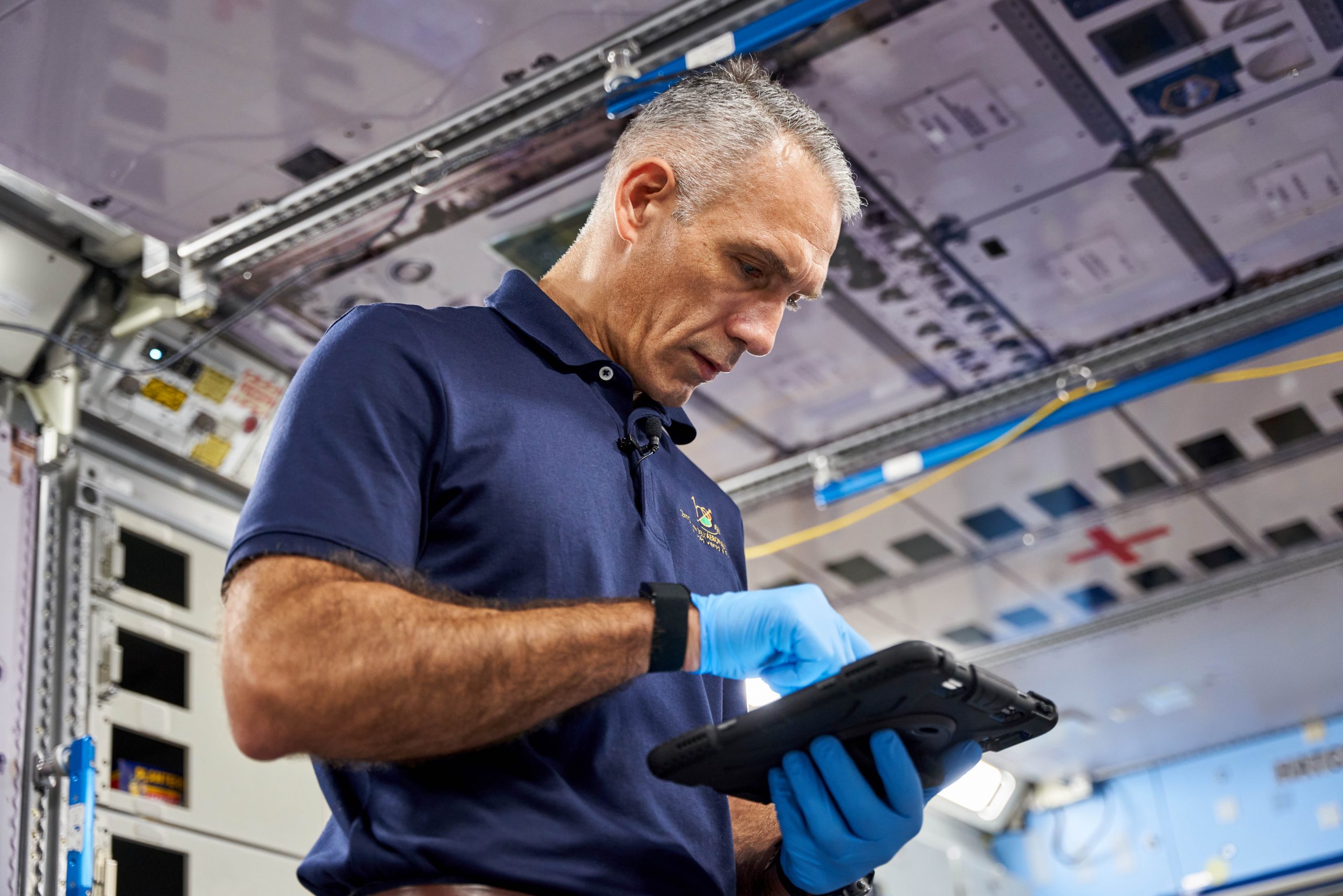
The Italian Air Force has carried out experimentation activities, for the first time from space, on the ISOC (Italian Space Operations Centre) software system, the heart of its Space Situational Awareness (SSA) capability.
Developed by the Italian Air Force, the ISOC system provides an updated catalogue of space objects and innovative algorithms for space-related events, such as collisions.
The astronauts on board the ISS have replicated some analyses normally carried out by the SSA Centre, one of the European space operations centres at the forefront of monitoring space objects re-entering the atmosphere and which constantly monitors possible collision events between active orbiting artificial objects (including the ISS) and space debris.
This project is an experiment proof-of-concept (experimental technology demonstrator) aimed at showing how astronauts could achieve near real-time conjunction assessment with limited support from ground segments or even autonomously. Operators will be able to monitor hazardous approaches and estimate orbital manoeuvres.
ISOC Card (.pdf)
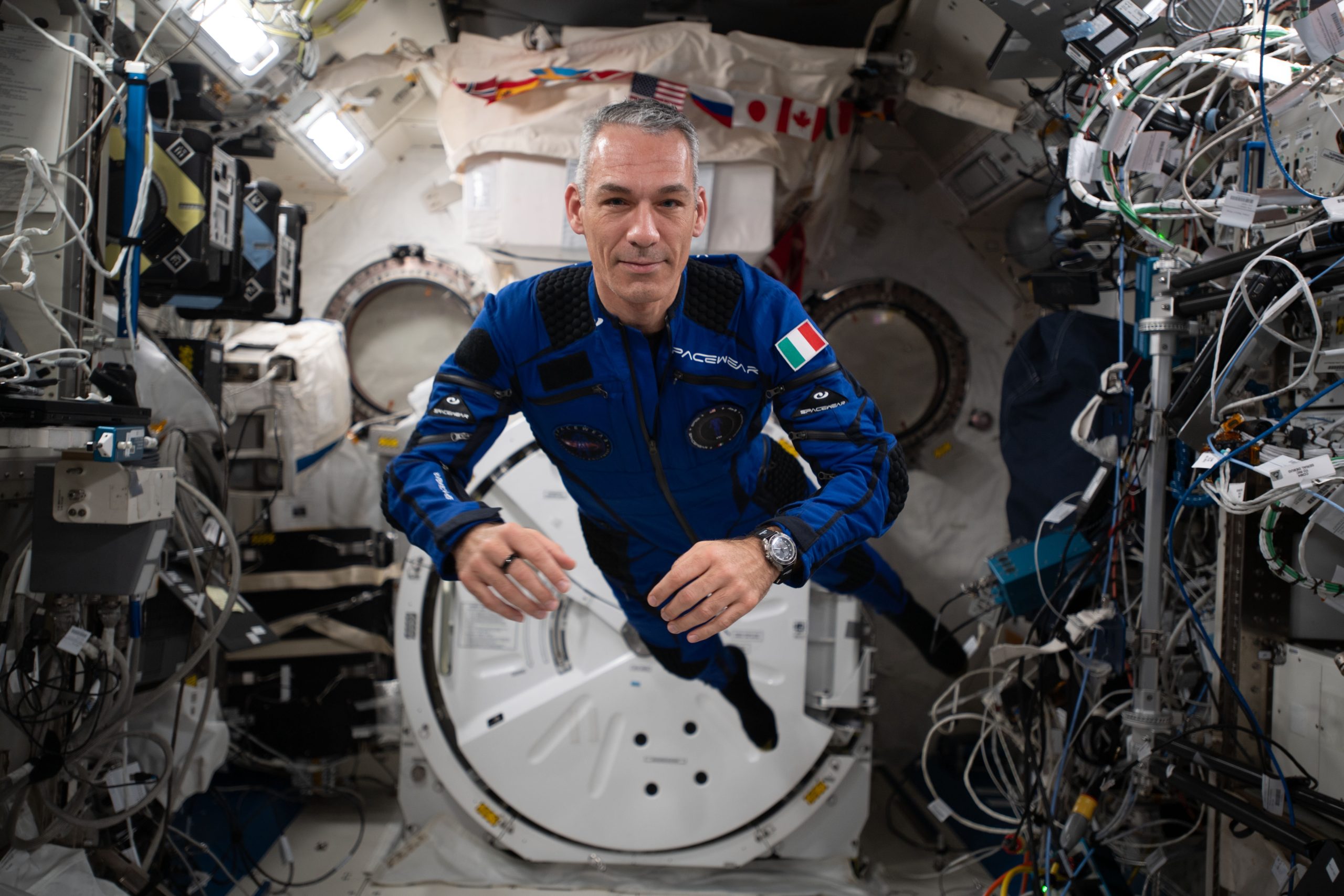
SFS2, designed and manufactured by Spacewear, is the new interactive spacesuit tested aboard the International Space Station (ISS).
The spacesuit has successfully passed the qualification process for spaceflight according to the most stringent international standards.
Crafted from over two hundred pieces and using a brand-new generation of ultralight, breathable, flame-retardant, and thermoregulating fabric, the suit detects numerous medical data from the astronaut by integrating a high-precision device that does not need to be in close contact with the body.
The integrated device on the SFS2 has been approved by NASA and the international board for the ISS and was enabled to detect medical data in Mission AX-3, allowing the SFS2 suit to monitor the astronaut.
The medical data collected by Spacewear on board, when shared, are also central to the research of players who participate in data collection only from the ground.
The device integrated by Spacewear is manufactured through close collaboration with Advanced Processing, whose device possesses the necessary functionalities and certifications for use on the ISS.
The research results of SFS2 may also have useful and innovative impacts for use on Earth.
In collaboration with the Italian Air Force and the Italian Space Agency (ASI), the Italian company REA has conducted an in-orbit test of EMSi (Electrical Muscle Simulation) – an intra-vehicular suit capable of monitoring and measuring astronaut movements.
The suit is made from an innovative material with antibacterial properties and is equipped with sensors to collect data on muscle activity in the arms, legs, and torso during daily operations. It also integrates compression properties to ensure proper redistribution of body fluids.
The project tested the suit during the Ax-3 mission, opening the door to future space missions, with the aim of improving the health and well-being of astronauts.
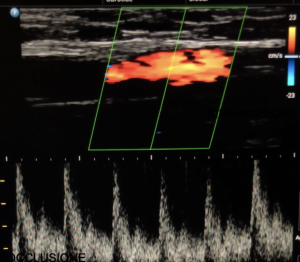
Led by the Air Force, this first-of-its-kind study involved the detection of ultrasound and blood flow parameters in the arteries of crew members by the Aeronautical and Space Medicine Department personnel, in parallel with the collection of blood samples related to the so-called “endothelial function”.
On this occasion, the International Space Station (ISS) has been transformed into a perfect orbiting scientific laboratory: the detections will not only be carried out in the pre- and post-orbital flight phases.
An important scientific study has added a new layer of knowledge on the interaction between prolonged space exposure, microgravity, and the human body for a better understanding of the physiology of endothelial dysfunction as a preclinical indicator of future cardiovascular diseases and as an indicator of arterial health during long-duration space missions.
Among the experiments destined for the ISS, Dallara has seized the opportunity to test its own textile technologies in microgravity environments to create innovative solutions for the commercial spaceflight sector.
Dallara is proud to have been part of this great project, both for exploring the intersection between cutting-edge technology and the unlimited potential of aerospace, and for having taken this opportunity to develop technologies for technological advancement.
This project helped to monitor the health status of the Astronaut before, during, and after the Ax-3 Space Mission.
The GVM Assistance Telemedicine Service (a company of the GVM Care and Research Group) can monitor the astronauts' health status and cardiovascular situation in real-time, through the detection of bioparameters, in the seven days before launch and the seven days after returning from the Mission, and conduct video consultations in microgravity conditions.
Medical devices, dedicated and integrated with the GVM Assistance Telemedicine platform, enabled the detection of the necessary bioparameters to monitor the astronaut's health. The astronaut had the GVM Assistance Space – Health app available to connect with the service and the GVM Assistance Medical Operations Centre.
The assessment of the trend of biological parameters at various times before and after the on-orbit Mission has made it possible to verify certain effects of microgravity conditions on the human organism, with the aim of identifying methods to reduce them.
Moreover, an advanced Telemedicine Platform has been tested as a tool for health monitoring of individuals on a space mission.
The experiment conducted by Mental Economy, an innovative startup specialising in mental training, aimed to measure Neural Efficiency.
The activity was carried out in collaboration with the Air Force Staff.
Data collected from astronauts before and after their flights, through specific tests that monitored parameters related to cerebral efficiency, have enabled researchers to understand if, and how, the microgravity environment can influence cognitive functions.
The results of this study will contribute to the development of mental training programmes and monitoring systems specific to the unique microgravity environment and to future space missions.