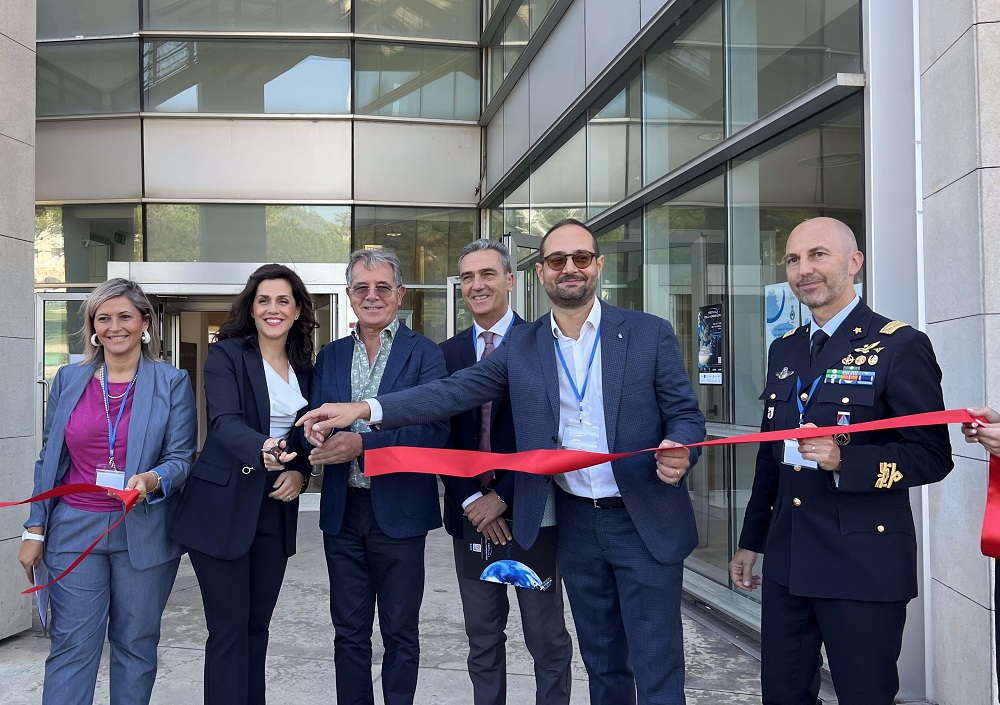
The event organized by Astec – AeroSpace Technology Education Center – saw the participation of authoritative figures from the sector to share experiences, opportunities, and news from the aerospace world.
From September 26 to 28 it took place in Olbia It “Festival of Aerospace 2024”, a three-day full immersion in the fascinating world of aerospace that brought them together Leader of sectors of industry, institutions, research centers, scientific bodies, universities and schools.
Conferences, round tables, informative moments, interactive and educational workshops for the youngest have allowed the large number of attendees to get closer to a world rich in opportunities, also in terms of training and employment.
The ribbon-cutting ceremony was attended by Mayor of the Municipality of Olbia, Seventh Nizzi, the’Councillor of Culture, Sabrina Serra, the Director of the festival and founder of Astec, Marilisa Pischedda, the President of Astec, Rocco Gigliotti, the Coordinator of the “PNRR Sardegna” project unit”, Fabio Tore and the Commander of the Air Force Command for the Autonomous Region of Sardinia (CAMRAS) and the Inter-Forces Field of “Salto di Quirra” (PISQ), Brigadier General of the Air Force Davide Cipelletti.
The’Regional Councilor for Labor, Vocational Training, Cooperation and Social Security, Hon. Alma Desirè Manca, inaugurated the Festival’s work with a speech focused on the importance of creating new training paths and professional opportunities with a high technological content in the Region, with particular reference to the sectors of aeronautics and aerospace.
The guest of honor of the event was’Astronaut of the Air Force, Colonel Walter Villadei, He met and answered the many questions of enthusiastic students from local schools, who were fascinated by his account of his orbital experiences.
During the round table discussion on the topic “Sardinia’s prospects in the aerospace sector”, General Cipelletti outlined the main projects with which the Air Force is working “It brings the world to Sardinia and Sardinia to the world”Among these are the’International Flight Training School based on the military airport of Decimomannu and the Aerospace projects hosted at the PISQ, including the stratospheric platforms, the European Space Agency project Space Rider and the new sensor of the Air Force for the capacity of Space Surveillance and Tracking. “Aerospace represents a strategic sector for the future of our country – the General stated – Our goal is to contribute to progress by supporting the development of the most advanced technologies and involving the new generations, who will be the protagonists of change.”.
AThe round table also included the participation of Vice President of the Autonomous Region of Sardinia and Minister of Budget, Mr. Giuseppe Meloni.“We can achieve important results provided that we work in synergy. – declared the Deputy of the recently installed government – In this regard, the Region collaborates very well – as has been said and I confirm it – with the Interforze Complex in Salto di Quirra.”.
The strong connection between the island and the aerospace sector is evidenced by the recent renewal of the collaboration agreement signed between the Ministry of Defense and the Sardinia Aerospace District (DASS), which has resulted in several activities carried out within the Interforze Experimental and Training Area of “Salto di Quirra”, a national center of excellence for the testing of cutting-edge technologies, an ideal place for conducting scientific activities in full compliance with safety and environmental protocols.
The Inter-Service Experimental and Training Range of Salto (PISQ), established in 1956, ensures the advanced training of the national and foreign Armed Forces, as well as hosting the execution of experimental tests and the development of prototype and experimental systems, and collaborates with national scientific and university institutions, foreign industrial entities, and civil societies operating in the defense sector and beyond. It also collaborates with institutional entities, voluntary associations, civil protection, mountain and speleological rescue services, and other entities in order to ensure training for the ability to manage joint emergencies and protect the territory, as well as for the synergistic development of projects of dual value. It also promotes the development of collaborations in the civil research sector. With the sensors deployed in its territory, it is an integral part of the European program for the monitoring of space debris called Space Surveillance and Tracking (SST).