

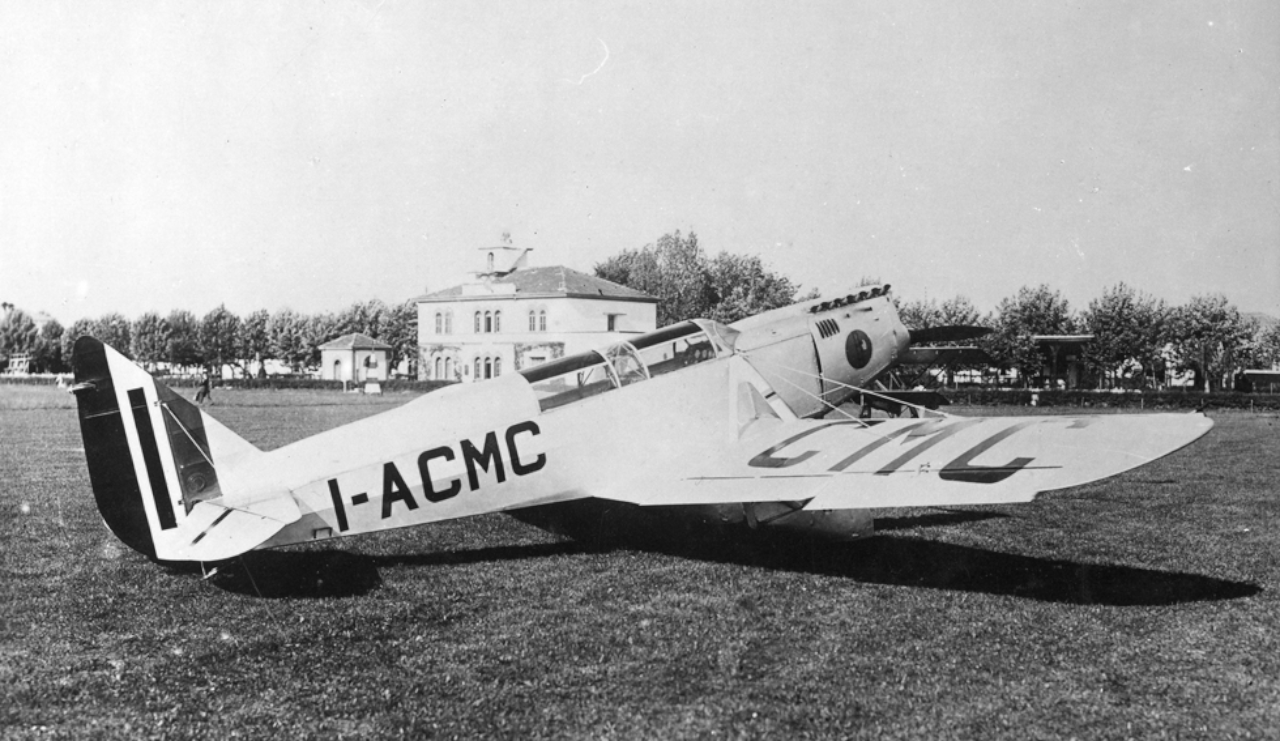
Two-seater, single-engine, low-wing monoplane for touring, sport, and liaison.
The Breda Ba.33 was a low-wing monoplane with a two-seat fuselage.
The first prototypes came in first and second place in the 2nd Giro Aereo d’Italia, an exploit that prompted the Air Force to commission six aircraft with a 130 HP Colombo S.63 engine to participate in the 1932 International Tourist Challenge.
Halfway through the race, the loss of two aircraft due to structural failure caused the team to withdraw.
The Ba.39 was created, strengthened, larger, and with flaps. In 1936, the Ba.39s were distributed to operational units and predominantly to the independent groups of the ZAT.
The Ba.39s were present in both the Spanish Civil War and in the post-war period in Ethiopia, where the State Staff squadron of Mogadishu received 9 “metropolitan” type Ba.39s for communications, two of which were transferred to a special section of the 4th Group.
Despite sales to the RUNA sections and private individuals, the Ba.39 continued to provide service for liaisons.
The last one was registered in 1947.
For more information, please consult the store. Amazon of the Italian Air Force at the following link:
