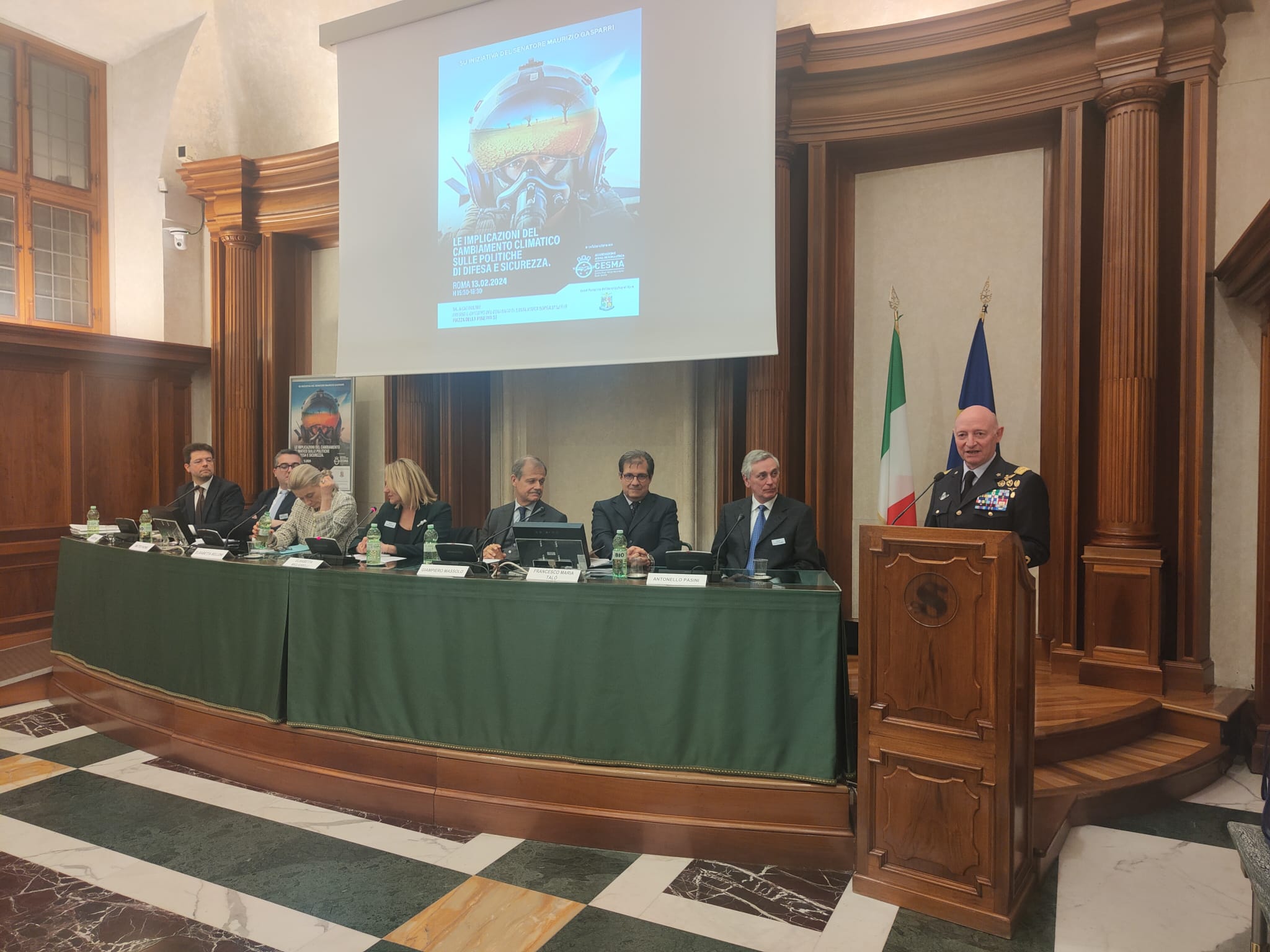
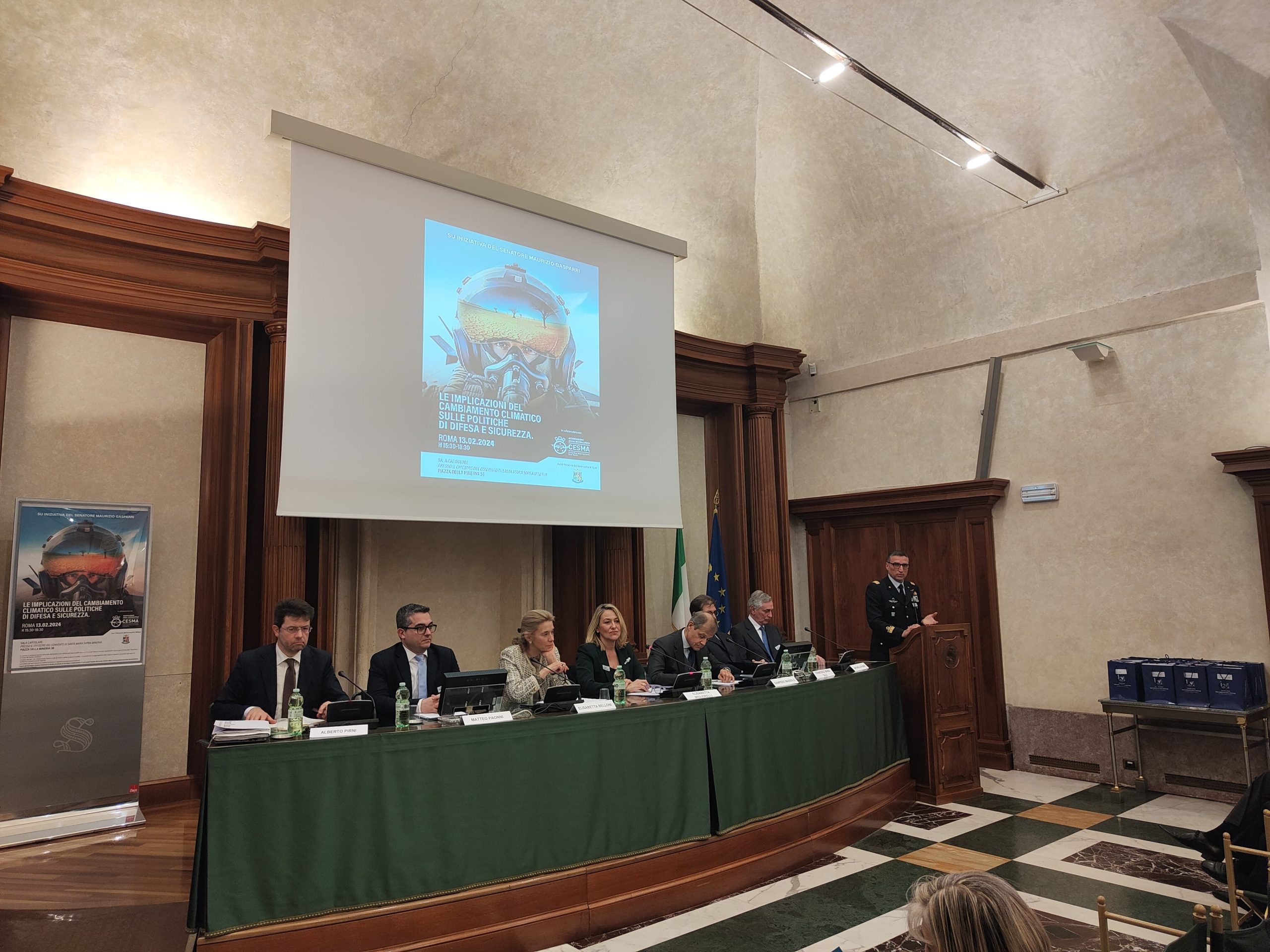
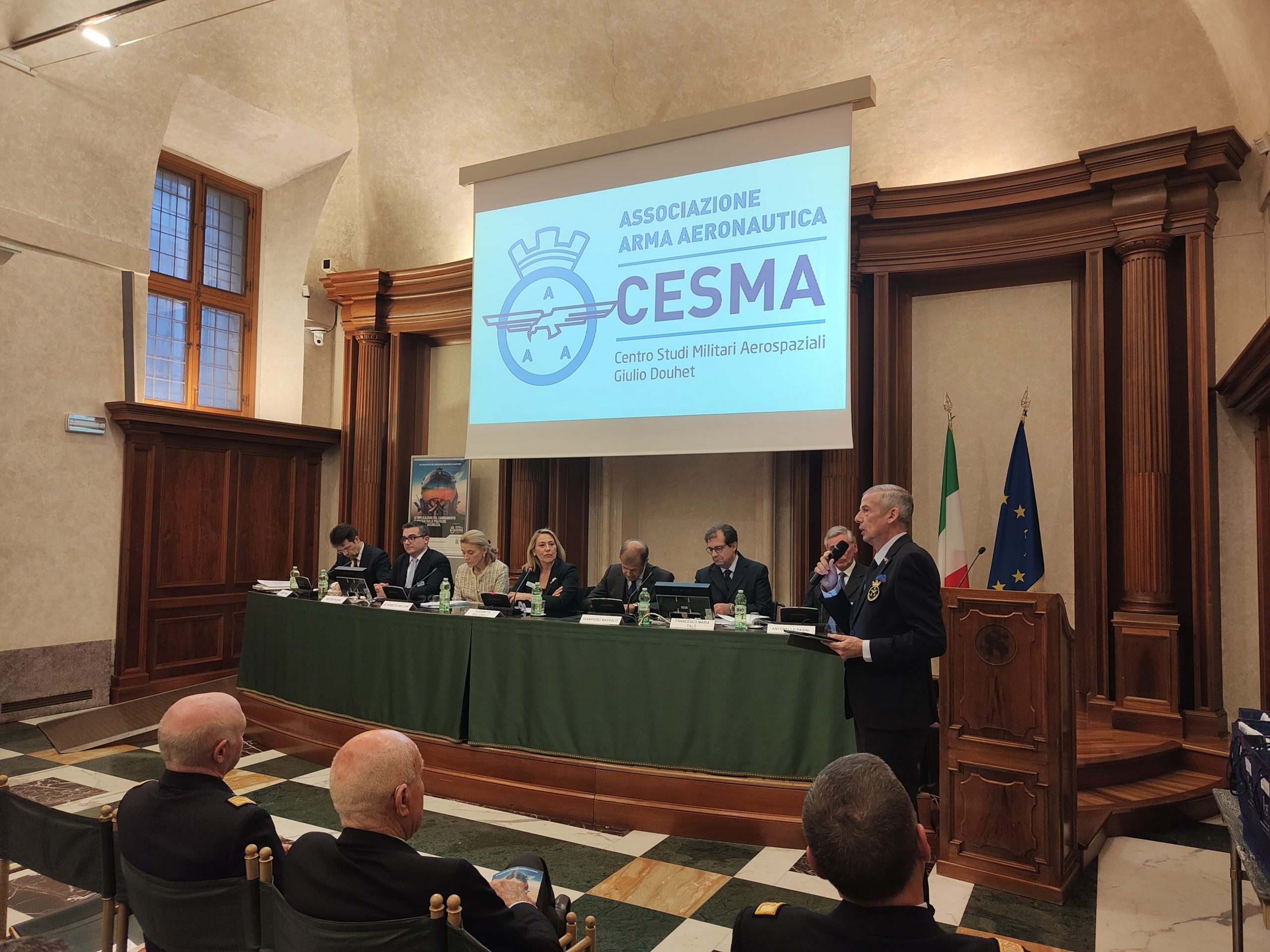
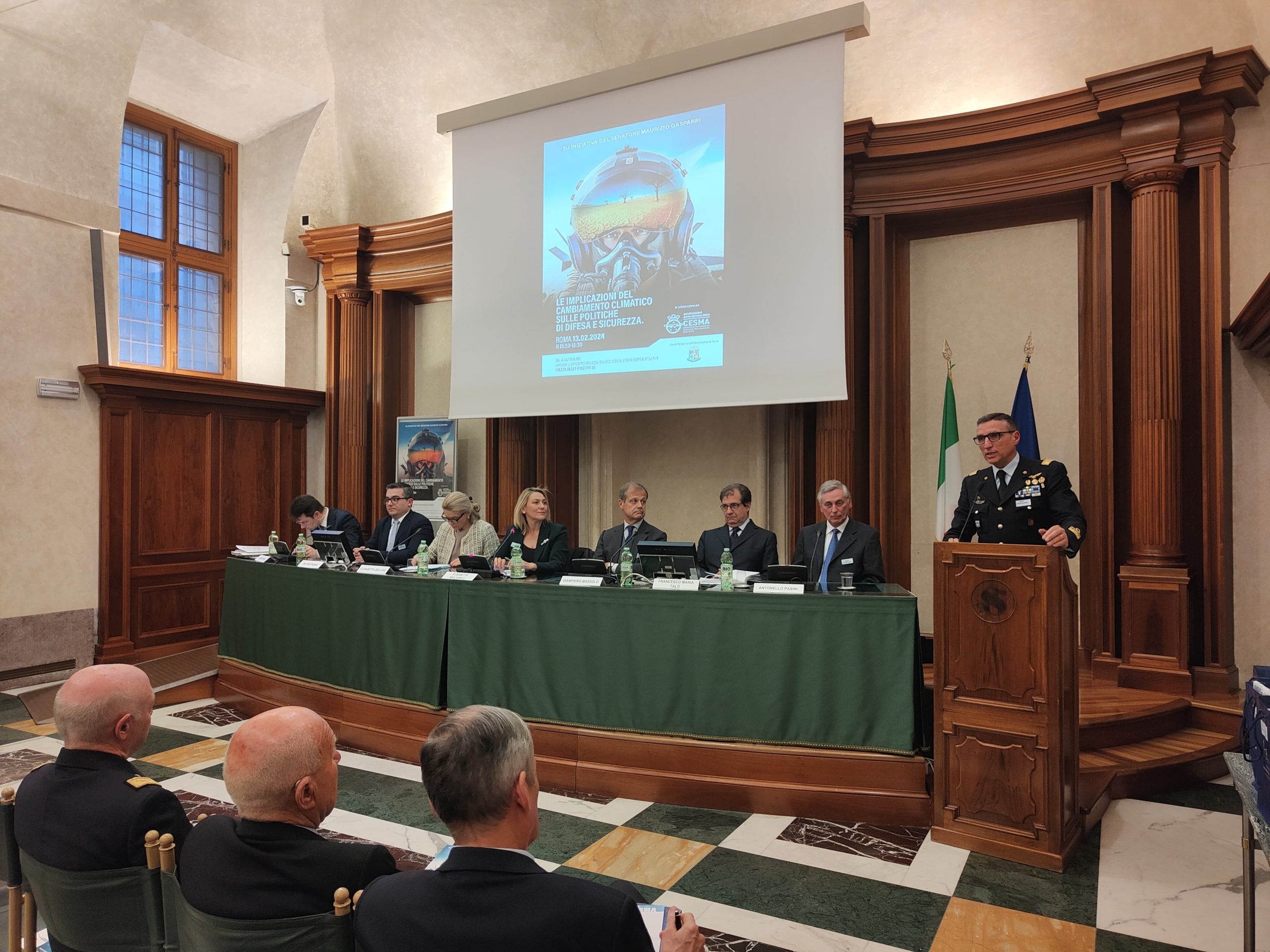
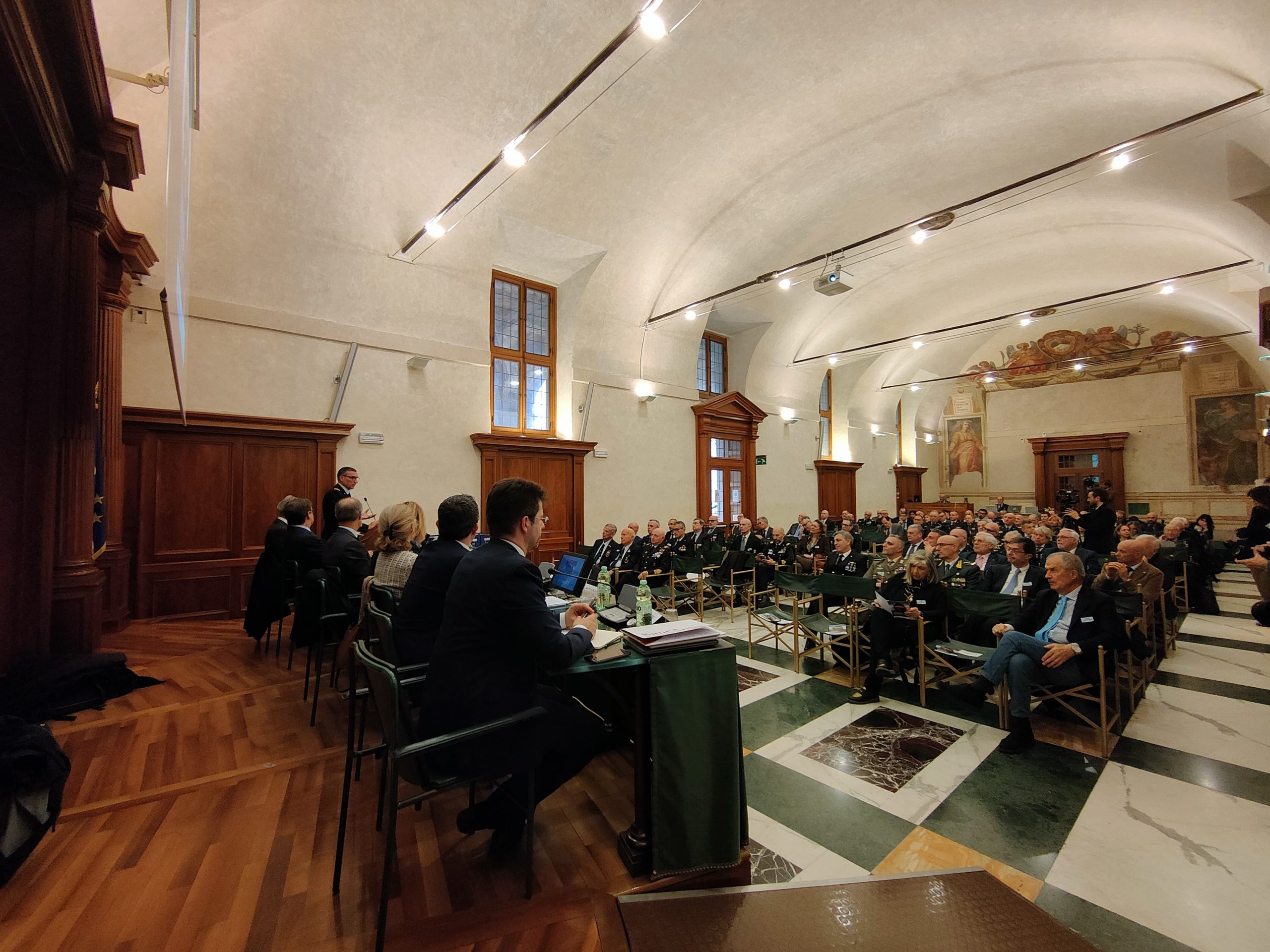
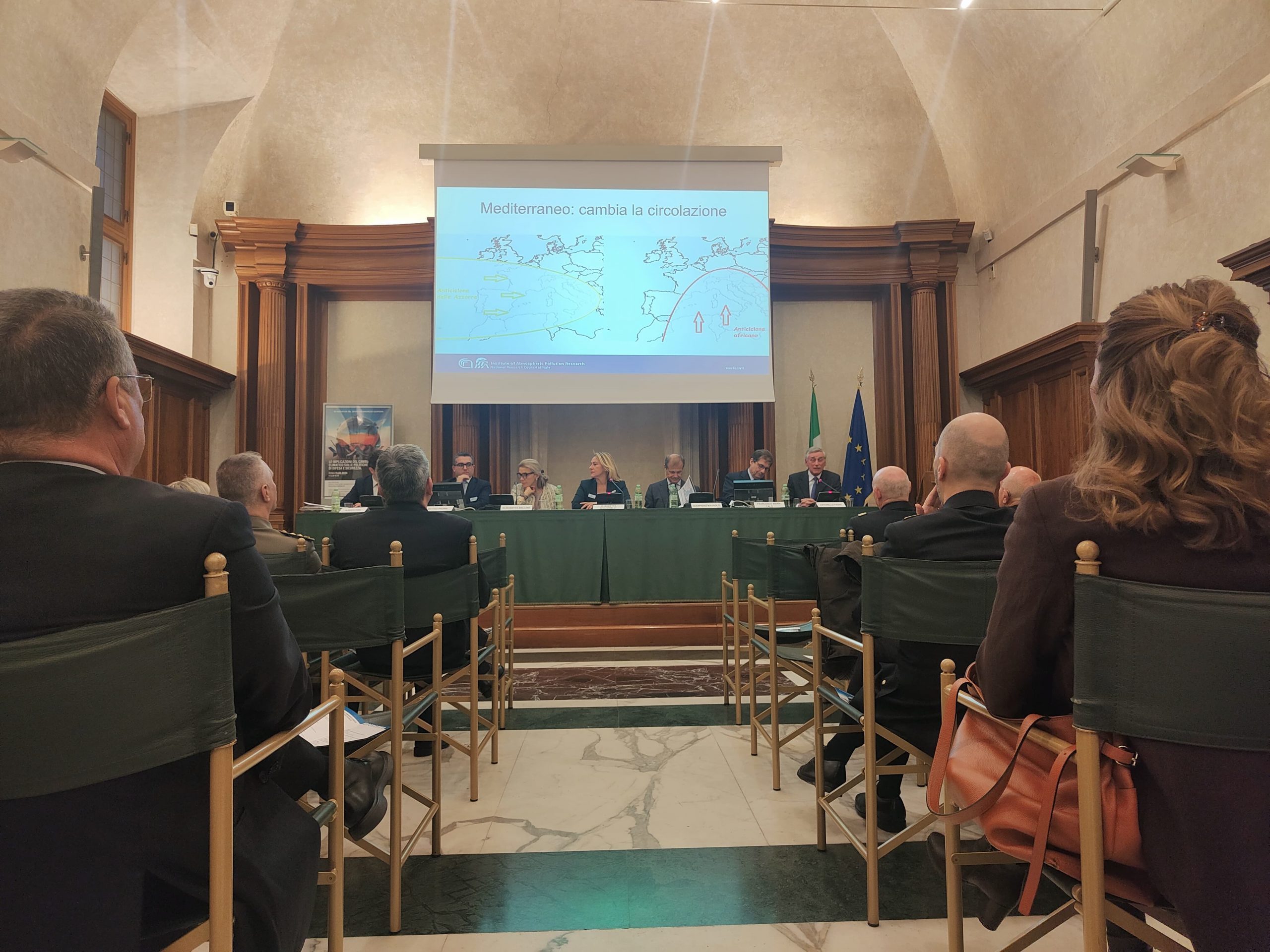
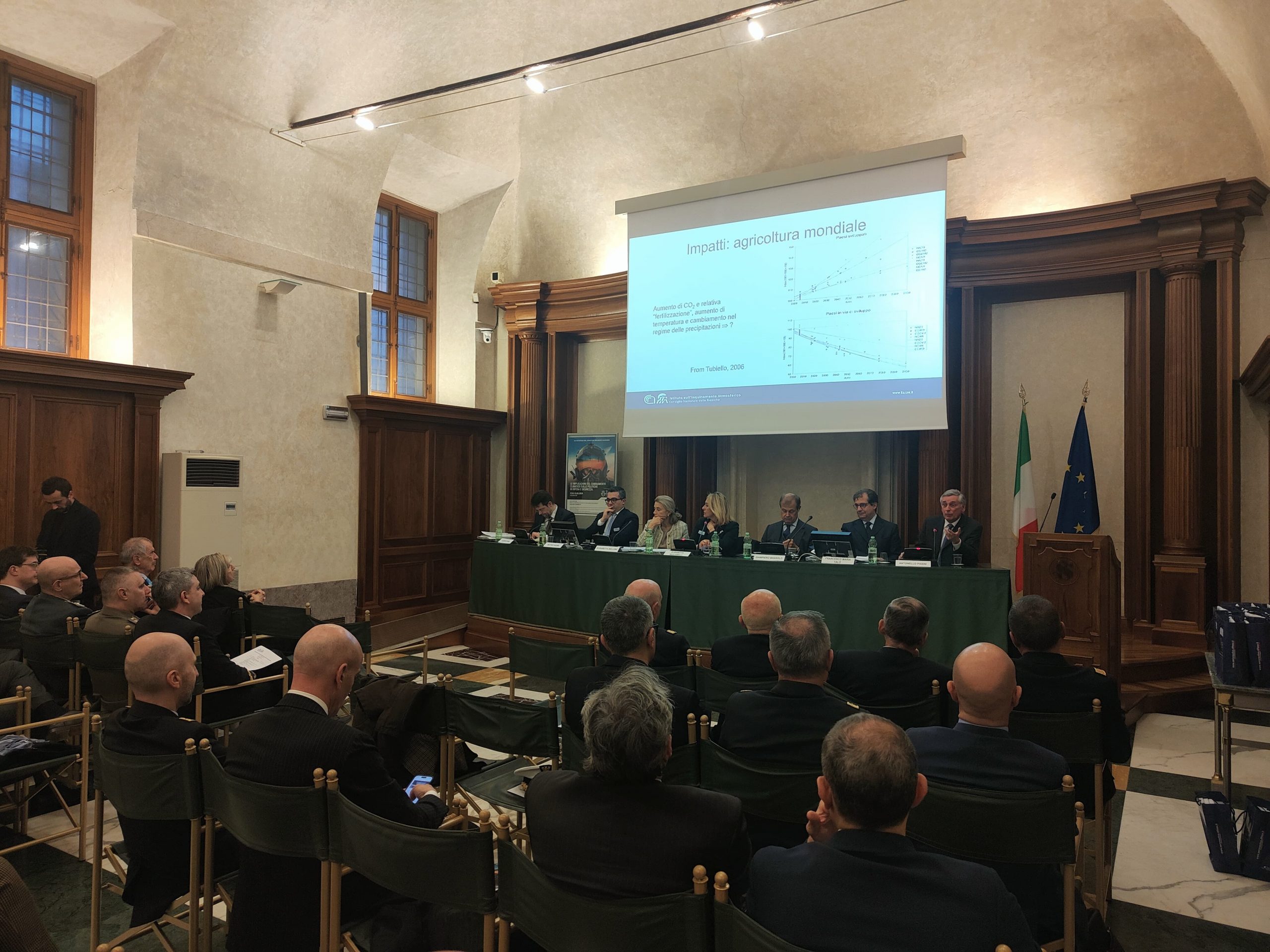
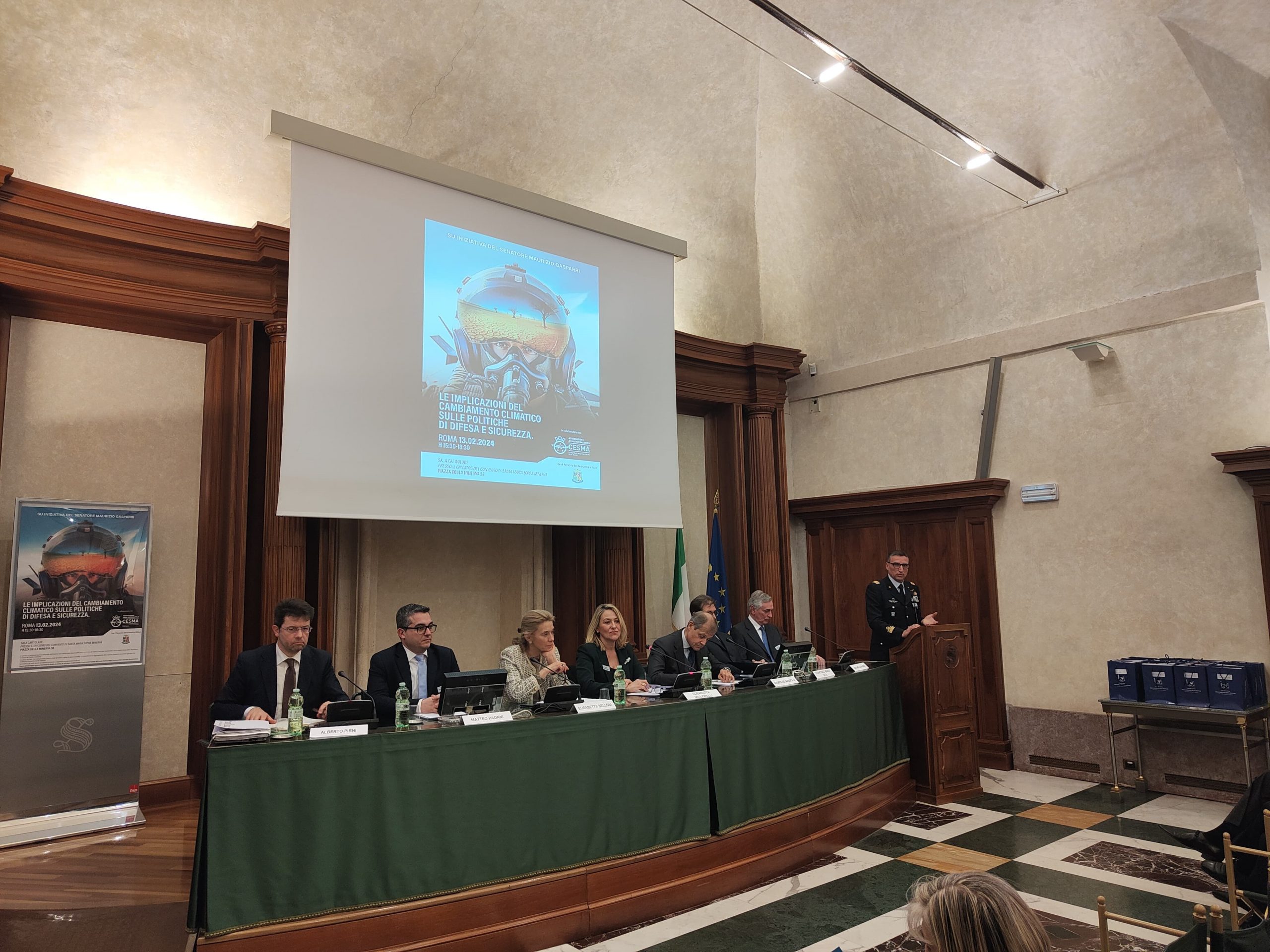
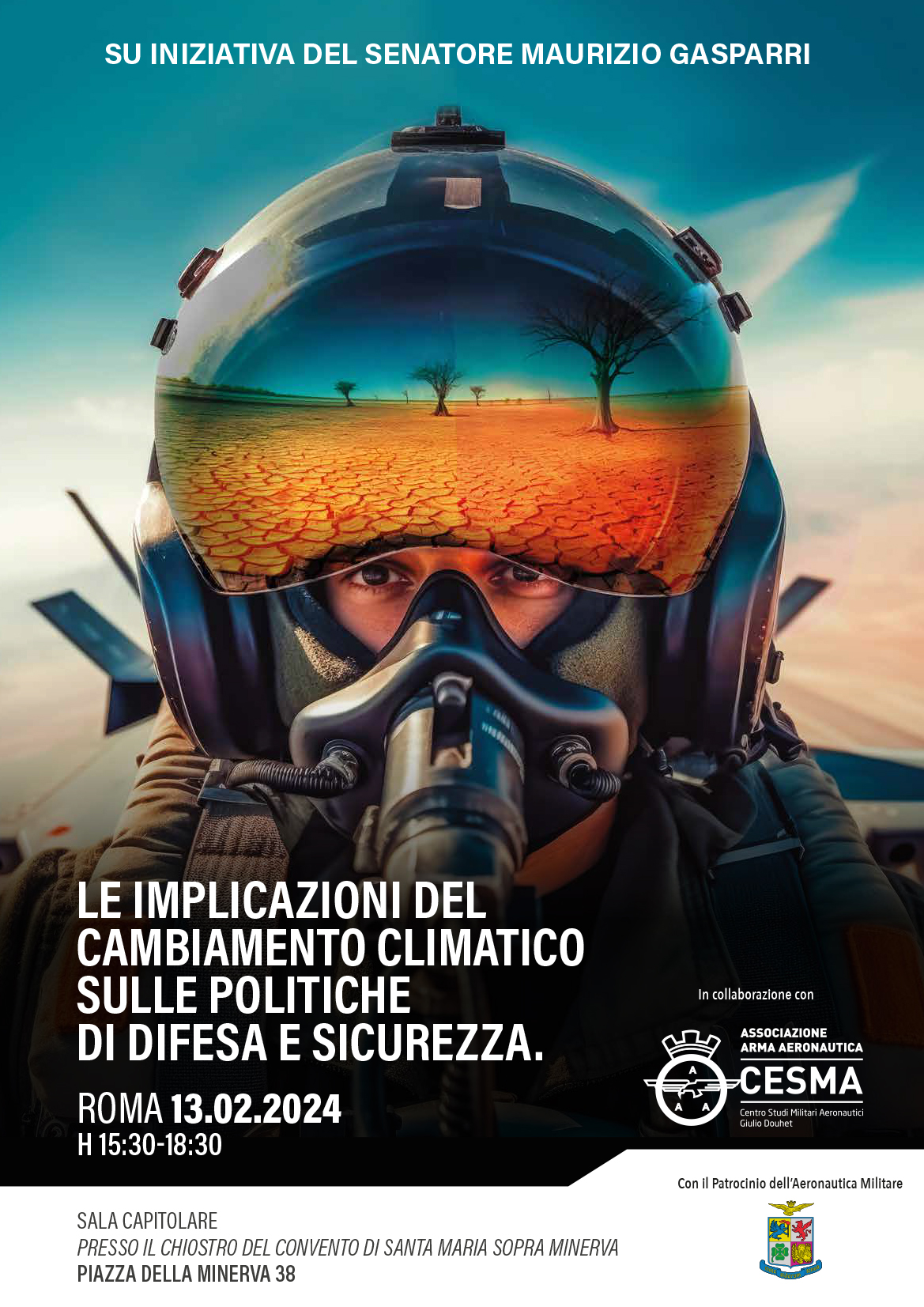
The round-table conference took place at the Senate in Rome, in the Capitolium hall near the cloister of the Convent of Santa Maria sopra Minerva
It was held Tuesday, February 13, in the Chapel of the Capitol at the Cloister of the Convent of Santa Maria sopra Minerva In Rome, the conference with a round table titled “The implications of climate change for defense and security policies”, organised by the Military Aerospace Studies Center “Giulio Douhet” (CESMA) of the’Association of the Air Force – Aviators of Italy, with the sponsorship of the Air Force.
The works, in which illustrious representatives of the institutional, scientific and academic world took part, were opened by Director of the Center for Military Aerospace Studies, Air Force General (r) Giovanni Fantuzzi, In his speech, he wanted to emphasize the global scope of the conference’s theme, on which the international community mobilized to adopt measures capable of combating the consequences of the rise in the Earth’s average temperature. There are, in fact, no human activities or regions on our planet that are not affected by the effects of climate change, which manifests itself in meteorological phenomena of unprecedented intensity and with increasing frequency. These dynamics have a greater impact in developing countries, which suffer more severely from extreme events, both due to their geographical location and the lack of protection and prevention systems. For this reason, the agencies responsible for defense and security at the national, European and transatlantic level have long focused their attention both on altering strategic balances, which could especially lead to significant vulnerabilities in some regions of the world, and on the degradation of the same operational capabilities of military and security structures due to climate change.
Before starting the discussion of the roundtable, the Brigadier General Luca Baione, Head of the General Office for Military Aviation and Meteorology (Aviamm) of the Air Force, as well as Permanent Representative of Italy to the World Meteorological Organization (WMO), He wanted to introduce the topic of the debate, highlighting in particular the “The role that the military instrument is called upon to play, and it is assumed that it will continue to grow in the future, to contribute with the Civil Protection agencies to the management of national and international emergencies in support and relief to civilian populations affected by extreme events due to climate change. Moments of confrontation and debate like these fit within the framework of those fundamental initiatives to broaden the perspective on the ongoing assessments on these topics and to offer differentiated, deliberately differentiated viewpoints so that they can be integrated in an holistic and cross-cutting manner. Climate change is global and of long duration. Consequently, if there is no cross-cutting, common, inter-agency, multidisciplinary approach, it will be truly difficult to confront it in appropriate ways.”.
The round table was attended by Ambassador Elisabetta Belloni, Director General of the Department of Information for Security at the Council of Ministers, Ambassador Giampiero Massolo, President of the Institute for International Policy Studies (ISPI), and Ambassador Francesco Maria Talò, Advisor to the Minister of Defense. During the conference, the following also spoke: Dr. Antonello Pasini of the Institute for Atmospheric Pollution of the National Research Council, Dr. Matteo Paonni of the European Commission, and Prof. Alberto Pirni of the Sant’Anna School of Advanced Studies in Pisa. General of the Air Force (c) Giulio Mainini, National President of the Aeronautica Militare Association, was also present in the room.
At the conclusion of the conference, the Chief of Staff of the Air Force, Air Chief Marshal Luca Goretti, In highlighting the importance of the event, he emphasized how important this kind of initiative is because it provides an impetus, even for the military instrument, to better address the challenges that the future holds for us.“We have the obligation to understand and analyze these issues in depth”“, declared General Goretti, “to prepare the military instrument to adequately face the challenges, in the fields of defense and security, that the present and the future hold in store for us even more”He then continued: “The Air Force wants to be a facilitator of these initiatives and these reflections, by also telling what we do on a daily basis to combat this phenomenon. Through research, through knowledge, but above all through dissemination – concluded the Chief of Staff of the Air Force – we can prepare ourselves to improve our existence and to allow political decision-makers and citizens to be certain that the Defense exists and will also exist in the future, with the useful tools that will be needed to continue defending our freedom.“.
It Meteorological Service of the Air Force It represents the country in the highest international and intergovernmental bodies in the sector. In particular, within the activities and publications of the World Meteorological Organization, it contributes to the drafting of the Global Climate Report and the Italian Annual Bulletin through its experts from the National Center for Meteorological and Aerospace Climatology in Pratica di Mare.
Read the news on the website of the Arma Aeronautica Association – CESMA