Insert subtitle
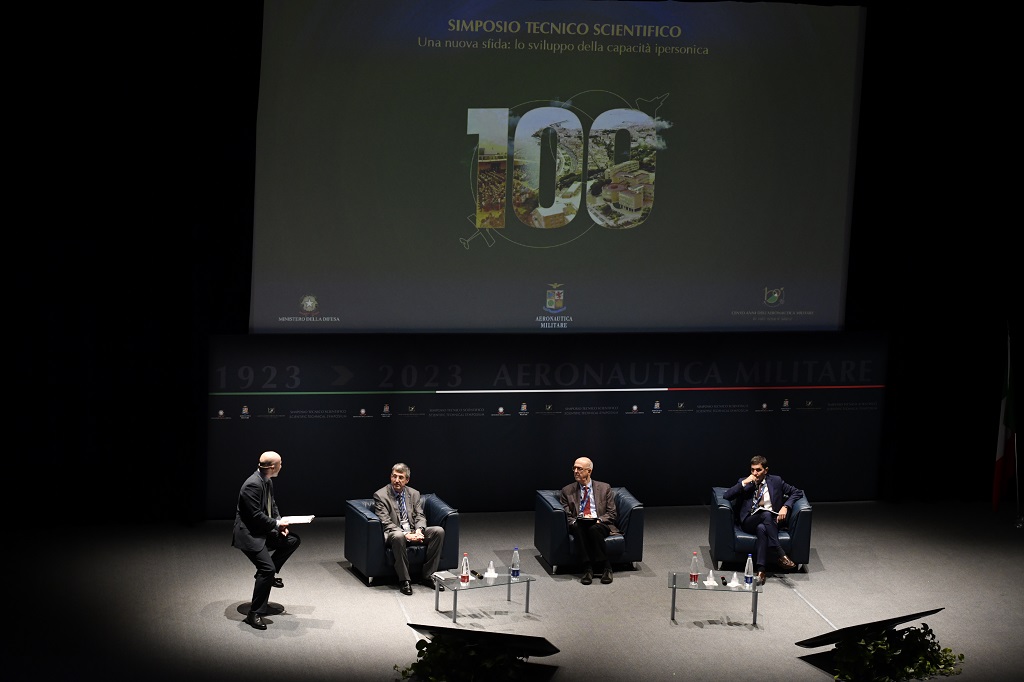
The two-day technical-scientific symposium organized by the’Air Force within the framework of initiatives for the Centenary of the Armed Forces To delve deeper into the topic of developing a national hypersonic capability, a question that is all the more relevant and of great strategic importance in the future.
A process of discussion, study, comparison and analysis that began more than six months ago and involved about 80 technical, scientific and civil and military experts, and that brought together at the Air Academy of Milan about 100 people. Pozzuoli, Thursday 9 and Friday 10 November, the most important excellences and expertise in the sector from the world of the Defense and the Italian aerospace sector, as well as teachers and students from the most prestigious Italian and foreign universities.
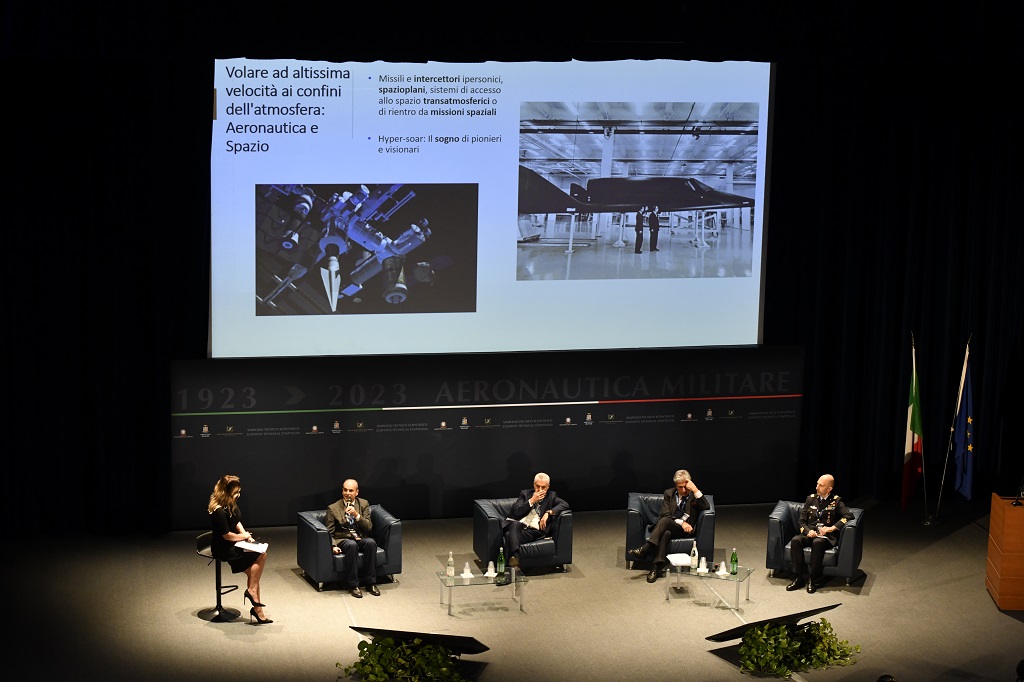
The findings of this complex study and research project have been summarized in five thematic panels, Moderated by Rai journalists Manuela Moreno and Andrea Bettini, the event featured military experts, academics, scientists and industry representatives who provided an overview of the work carried out by various technical committees on topics considered of greatest interest in the field of hypersonic technology: from aerodynamics to communications, from propulsion systems to advanced materials, from airport facilities to space law, and also on aspects related to sustainability and human physiology in space.
“We believe that this symposium, and the strategic document that brings together all the work carried out in these months and will soon be completed and made available to the scientific community and military and political decision-makers, May it chart a path, serve as a starting point in the future debate on the development of this capability, and make an important contribution in identifying the necessary transformations in the industrial, scientific, regulatory, and infrastructural fields to keep up with the other players who are already embarking on this endeavor””, declared the Chief of Staff of the Air Force, Air Chief Marshal Luca Goretti, who opened and closed the proceedings during the two days of the symposium.“The current scenarios demonstrate the relevance of this topic, due to the confluence of challenges, threats and opportunities that it brings with it, but above all for the far-reaching implications for aerospace engineering, national defense and scientific exploration.”. We are entering an era where we will become increasingly dependent on speed and the ability of systems to adapt and react; factors that in the collective imagination have always been closely linked to aerospace and space forces. To be relevant as a country system, it is essential to understand how to use these technologies for defense and security, but also to fully grasp their potential even in a dualistic perspective. We leave this two-day event with the awareness that there is much to be done, but that as an Italian nation we have the tools to compete and the skills to lead this process internationally. Resources and a stable long-term vision are needed. To succeed, and I say this in this assembly, specifically referring to the young students of the Aeronautical Academy who will be the backbone of the Armed Forces of tomorrow, but also to all the young researchers of the Italian universities, we must invest in and trust these young people; we must believe in their visionary skills. We must be good at understanding how to seize the opportunities that the world we live in offers us, in every sector.”.
Among the most appreciated interventions were those of the Engineer. Tommaso Ghidini, Head of the Mechanical Engineering Department of the European Space Agency, who emphasized how the space and flight in space topic is evolving. “We are opening a new frontier in the field of space flight,”, said Engineer Ghidini. “To fly in space we need a series of technologies; hypersonic is certainly one of them. First of all, we need to ask ourselves what technologies we need to make a flight of this kind. We are talking about propulsion, materials, structures, so flying at very high temperatures and flying in a precise way, including navigation. All these technologies will then be found in environments much closer to us, such as passenger transport flights, but also flights that could even take us out of the atmosphere to fly very fast and bring the world closer together. I firmly believe that this symposium is crucial to open a debate on certain topics and that it could really be the starting point for new initiatives, workshops to be developed at national and European level to continue, as a single big family, on this path of synergy and cooperation.”.
“The Italian Defense Department wants to be part of this technological leap; indeed, its ambition is to contribute to guiding it in developing effective defense systems, also in a deterrence context.“, he stated Brigadier General of the Air Force Davide Cipelletti, Chief of the General Staff Space of the Defense Staff in his speech.“We are facing a constant compression of that threshold that separates aerospace from the real space, and this is a challenge that must be addressed in a synergistic way. In Italy we have great academic, scientific, and industrial capabilities with which the Defense Department wants to collaborate to develop new technologies and strengthen mutual knowledge and expertise. The Italian Defense has already good operational capabilities, including what is technically referred to as Space Situation Awareness, which is the ability to observe from the ground what is happening in space. We do this thanks to a network of radar and optical sensors from the Defense and the Air Force, and also in collaboration with other sensors from the Italian Space Agency and the National Institute of Astrophysics; an inter-agency competition that allows us to observe the objects that fly over the Earth in space, calculate their trajectories and verify whether they may pose a problem for satellite systems of interest.”.
The presence of representatives of the national industry was abundant, both among the guests and in the panels that characterized the program of the two-day Symposium. A point of view and a fundamental contribution in this context of research and international cooperation, which was emphasized by the words of the’Ing. Lorenzo Mariani, Co-General Director of Leonardo and President of MBDA Italia: It is evident that there is an acceleration linked to economic and geopolitical aspects, a quantum leap in technological progress that represents a challenge in which industry certainly plays a very important role. We must put together all the best skills and knowledge of the country to be credible internationally and to seize this epochal opportunity. These are such innovative topics that cohesion, the simultaneous presence of the armed forces, industry and academia are essential factors and I find it particularly significant that this has been done in this place, where a piece of the country’s future is being built every day.
Also present from the United States were Colonel Luca Parmitano, a test pilot of the Italian Air Force and an astronaut of the European Space Agency (ESA), and Nicola Pecile, a former test pilot of the Italian Air Force and currently a test pilot in the United States of suborbital vehicles, who shared their experiences in their specific fields, emphasizing that their training at the Air Force Academy was the essential starting point in their professional careers.
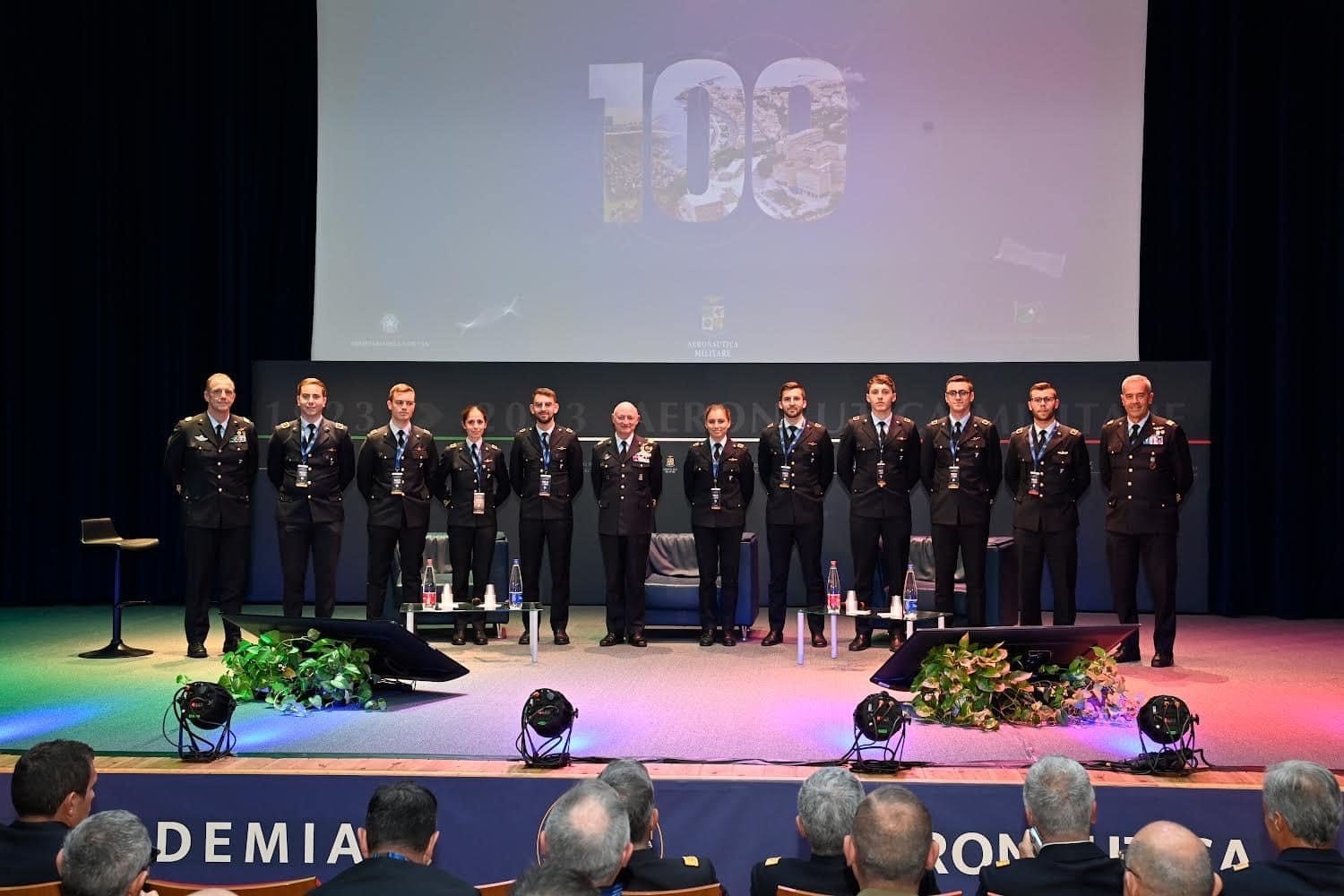
During the two days, at the conclusion of the various panels, some Sublieutenants who are members of the Air Academy presented the results of their doctoral dissertations on topics closely related to the topics of the Symposium, demonstrating the unique skills that the national university system, to which the Armed Forces contribute through university training programs integrated into the processes of their Training Institutes, possesses. “The future is in space, the future is yours!” With these words the Chief of Staff of the Air Force addressed the young attendees who followed the proceedings of the Technical-Scientific Symposium, inviting them to put all their passion at the service of our country.
As part of the organizational activities of the Technical-Scientific Symposium in Pozzuoli (NA), the following economic operators are particularly thanked for their contribution to the event: Leonardo S.p.A., Avio Aero S.r.l., Intesa Sanpaolo S.p.A. and L3Harris Technologies Inc.